1. INTRODUCTION
Impressionism emerged in France in the late 19th century, radically transforming the way artists, musicians, writers, and designers interpreted the world. The movement began as a rebellion against the rigid academic standards of the time, favoring spontaneity, light, and personal perception over historical or mythological themes.
The term “Impressionism” was coined after Claude Monet’s 1872 painting Impression, Sunrise, which was mocked by critics for its sketch-like quality. Yet, this “impression” became the banner for a new artistic vision. Key figures included Monet, Pierre-Auguste Renoir, Edgar Degas, Camille Pissarro, and Berthe Morisot in painting; Claude Debussy and Maurice Ravel in music; and Marcel Proust and Virginia Woolf in literature.
The movement peaked between 1874 and 1886, during which time the Impressionists held eight independent exhibitions in Paris, challenging the dominance of the official Salon and reshaping modern aesthetics.
2. IMPRESSIONISM IN PAINTING
Impressionist painters sought to capture fleeting moments, focusing on the play of light, atmosphere, and movement. They painted en plein air (outdoors), using short, visible brushstrokes and vibrant, unmixed colors to depict landscapes, urban scenes, and everyday life.
Key characteristics:
- Loose brushwork and lack of fine detail
- Focus on natural light and its changing effects
- Ordinary subjects: gardens, cafés, rivers, and city streets
- Unconventional compositions, often influenced by photography and Japanese prints
- Famous works include:
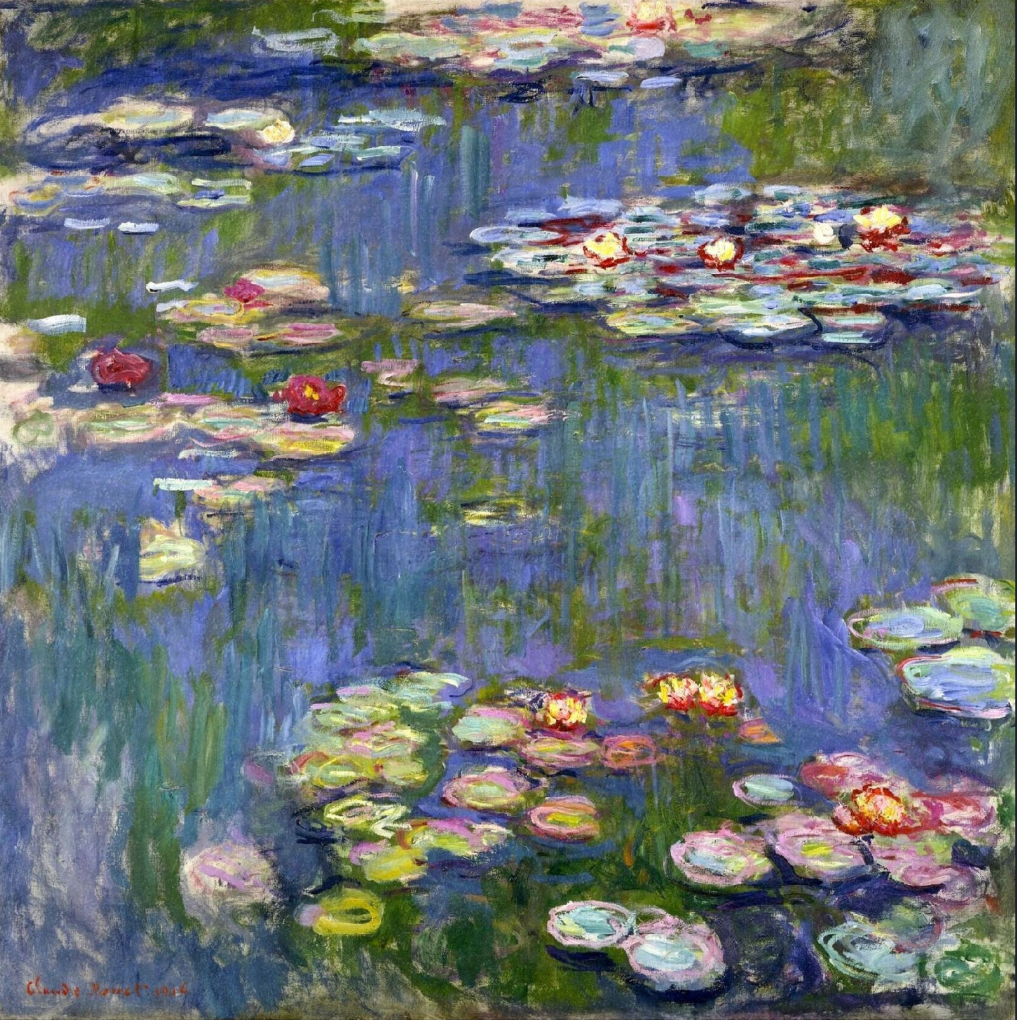
- Water Lilies by Claude Monet (above)
- Dance at Le Moulin de la Galette by Renoir
- The Ballet Class by Degas
3. IMPRESSIONISM IN MUSIC
In music, Impressionism emphasized mood, atmosphere, and tone color over traditional structure. Composers like Debussy and Rave (above)l used modal scales, whole-tone scales, and ambiguous harmonies to evoke emotion and imagery.
Musical traits:
- Fluid rhythms and non-traditional scales
- Orchestral color and subtle dynamics
- Titles inspired by nature (e.g., Clair de Lune, Reflets dans l’eau)
Rather than telling a story, Impressionist music suggests a feeling, much like a painting suggests a scene.
4. IMPRESSIONISM IN FASHION
Fashion during the Impressionist era reflected the modernity and elegance of Parisian life. Impressionist painters often depicted contemporary clothing, capturing the textures, colors, and movement of silk, lace, and tulle.
Key elements:
- Bustled skirts, corsets, and tailored suits
- Pastel tones and floral patterns
- Accessories like parasols, gloves, and hats
Fashion was not just a subject—it was a symbol of modern identity, especially in the works of Manet and Tissot. The movement also coincided with the rise of department stores and fashion magazines, making style more accessible and influential.
🏛️ 5. IMPRESSIONISM IN ARCHITECTURE
Though not a formal architectural style, Impressionism influenced architecture through its focus on light, transparency, and atmosphere. Buildings began to emphasize open spaces, large windows, and natural surroundings.
Examples:
- The Eiffel Tower (1889), with its exposed iron structure, became a symbol of modernity and industrial elegance.
- Glass pavilions and greenhouses reflected the desire to blend interior and exterior environments.
Architects began to think of buildings as experiential spaces, echoing the Impressionist goal of capturing a moment in time.
📚 6. IMPRESSIONISM IN LITERATURE
In literature, Impressionism focused on subjective experience, sensory detail, and stream-of-consciousness narration. Writers like Marcel Proust, Virginia Woolf, and James Joyce explored the fluidity of memory and perception.
Literary traits:
- Fragmented narrative structures
- Focus on inner thoughts and fleeting impressions
- Descriptive, poetic language
Proust’s In Search of Lost Time is a quintessential example, where a simple taste of madeleine cake triggers a cascade of memories—an echo of the Impressionist fascination with ephemeral beauty.
✨ CONCLUSION
Impressionism was more than a style—it was a philosophy of seeing and feeling. It invited the world to pause, observe, and appreciate the transient poetry of life. From brushstrokes to musical notes, from fashion to fiction, Impressionism continues to inspire how we interpret the world around us.
Would you like this turned into a visual blog layout or social media carousel next?