
1. INTRODUCTION
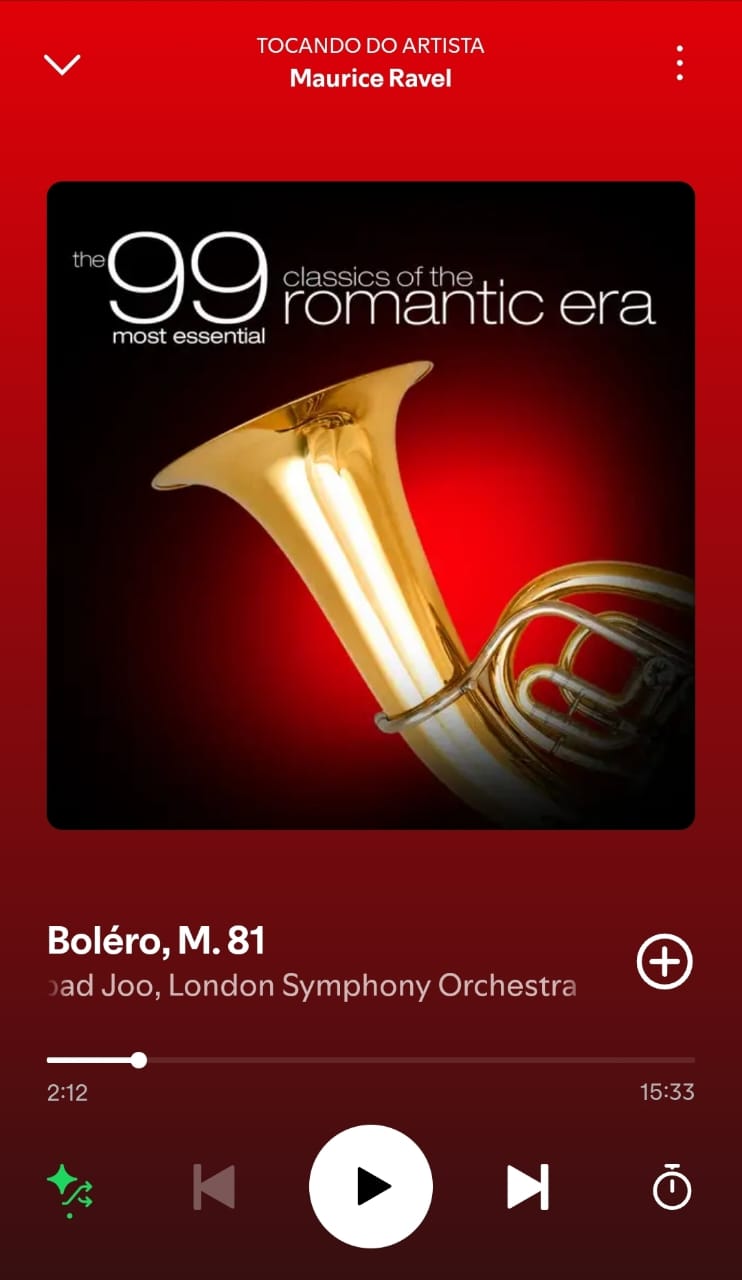
Maurice Ravel’s Boléro is one of the most iconic orchestral works of the 20th century. Composed in 1928 and premiered at the Paris Opéra on November 22, it was commissioned by Russian dancer Ida Rubinstein as a ballet piece. Though Ravel originally intended to orchestrate works by Isaac Albéniz, copyright issues led him to create an entirely new composition instead2.
Boléro was not released as part of a traditional album but quickly gained fame through live performances and recordings. Its popularity soared after conductor Arturo Toscanini introduced it to American audiences in 1929, sparking both acclaim and controversy over tempo choices. This song made its way into the blog because of my june’s blog post on ipressionism that yu can read here
2. HISTORY OF THE COMPOSER
Maurice Ravel (1875–1937) was a French composer known for his meticulous craftsmanship and innovative orchestration. Though often associated with Impressionism, Ravel preferred to be seen as a Classicist. His works span piano solos, chamber music, and orchestral masterpieces.
Ravel’s fascination with Spanish music and rhythm is evident in Boléro, which he described as “a piece for orchestra without music.” He considered it an experiment in repetition and orchestration, famously saying, “I’ve written only one masterpiece—Boléro. Unfortunately, there’s no music in it”.
3. ON THE VIDEOCLIP
While Boléro was originally conceived as a ballet, its most famous visual interpretations came later. The 1970s choreography by Maurice Béjart, featuring dancer Jorge Donn, became legendary for its sensual and hypnotic staging. This version was immortalized in Claude Lelouch’s film Les Uns et les Autres, with Donn performing atop a red circular platform beneath the Eiffel Tower.
In 2023, filmmaker Anne Fontaine released Boléro, a biopic exploring Ravel’s creative process and emotional struggles during the composition of the piece. The film features François Alu, former étoile of the Paris Opera Ballet, in a powerful dance sequence that echoes Béjart’s original vision.
4. TALK NERDY TO ME
Musically, Boléro is a masterclass in orchestration and minimalism:
- It’s built on a single rhythmic ostinato played 169 times by the snare drum.
- The piece features two alternating melodies, repeated and re-orchestrated across different instruments.
- The harmony remains in C major almost throughout, with a brief modulation to E major near the climax.
- Ravel uses instrumental layering to create a continuous crescendo, culminating in a dramatic full-orchestra finale2.
- The inclusion of saxophones—rare in orchestral music at the time—adds a jazzy timbre, reflecting Ravel’s interest in jazz.
5. MORE FROM MAURICE RAVEL
If Boléro left you breathless, Ravel’s catalog offers more sonic gems:
| 🎵 Composition | 🎹 Type | 🔗 Listen |
|---|---|---|
| Daphnis et Chloé | Ballet | YouTube Performance |
| Pavane pour une infante défunte | Orchestral | YouTube Recording |
| La Valse | Orchestral Poem | YouTube Video |
| Gaspard de la nuit | Piano Solo | Piano performance |
| Piano Concerto in G Major | Concerto | Live Performance |
Ravel’s works are celebrated for their elegance, precision, and emotional depth. Whether you’re a classical connoisseur or a curious newcomer like me, his music invites you to listen with both heart and intellect.