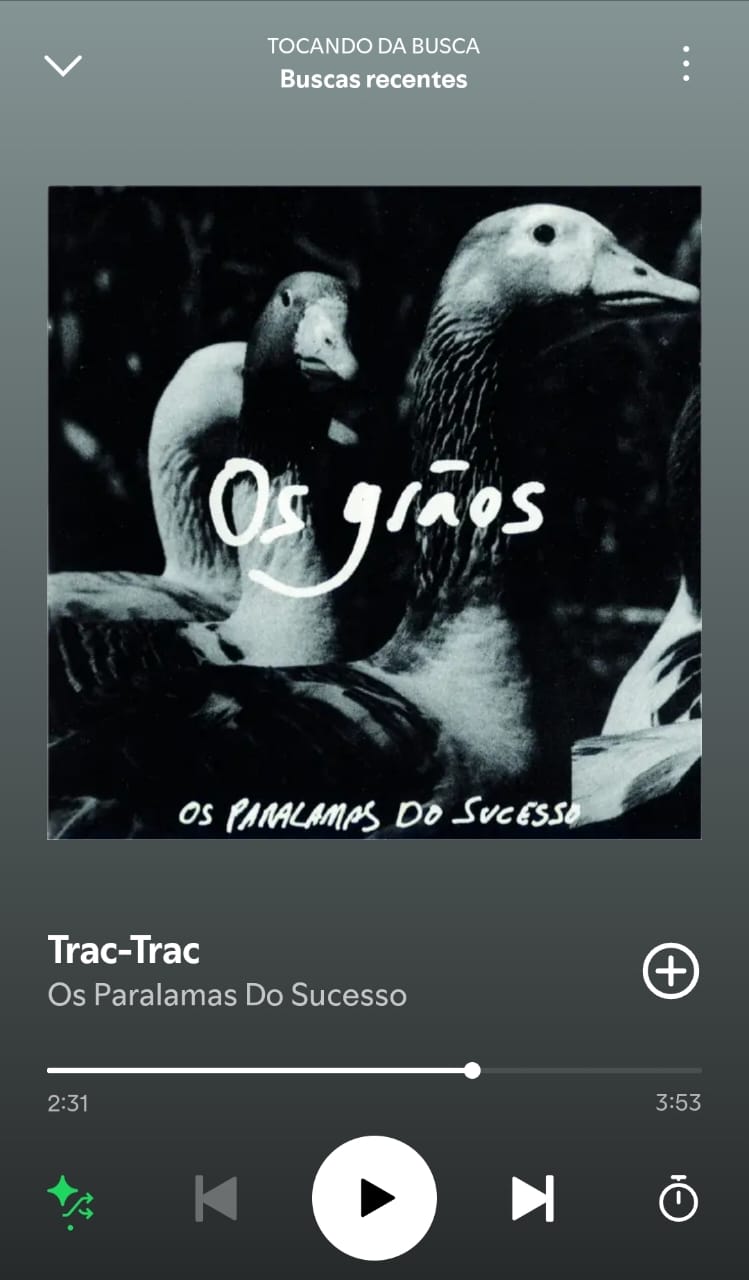
Long before cross-genre collaborations and transcontinental remixes became music industry staples, Os Paralamas Do Sucesso had already mastered the art of blending Latin rock and Brazilian flair. Their adaptation of “Trac-Trac,” released in 1991 as part of the introspective album Os Grãos, showcases their fearless creativity, musical dexterity, and enduring relevance in the Brazilian rock scene. Originally written by Argentine musician Fito Páez, the song’s migration from Buenos Aires to Rio de Janeiro resulted in something truly unique: a heartfelt anthem reinvented for a new audience, rich in emotional nuance and sonic dynamism.
INTRODUCTION: Where It All Began
“Trac-Trac” was originally released as “Track-Track” on Fito Páez’s 1987 album Ciudad de Pobres Corazones. The song resonated with audiences for its raw portrayal of emotional vulnerability in a politically charged era. When Os Paralamas Do Sucesso decided to rework it in 1991, they didn’t just translate the lyrics—they transformed the atmosphere. Their version, recorded with Fito Páez himself contributing piano parts and Fernanda Abreu lending her voice to the backing vocals, was a bold fusion of reggae, rock, and Latin undertones. It was more than just a cover—it was a cultural exchange.
The song became one of the highlights of Os Grãos, an album that marked a turning point in the band’s career. Moving away from their earlier upbeat ska-rock vibe, Os Grãos embraced introspection, experimental arrangements, and poetic lyricism. Though “Trac-Trac” didn’t dominate the charts like some previous hits, it earned loyal rotation on Brazilian radio and solidified the band’s reputation for emotional and intellectual depth.
HISTORY OF THE BAND: From Punk Roots to Poetic Giants
Born in the vibrant and politically active Rio de Janeiro music scene of the early 1980s, Os Paralamas Do Sucesso—comprised of Herbert Vianna (vocals and guitar), Bi Ribeiro (bass), and João Barone (drums)—quickly carved out a space for themselves with a rhythmic cocktail of ska, punk, and reggae. Their first major hit, “Vital e Sua Moto,” captured the energy of youth and rebellion. As they matured, so did their sound.
By the late ’80s, the band was using music to comment on Brazil’s shifting socio-political landscape, releasing classics such as “Alagados” and “Selvagem?” that blended melody with a message. Their lyrics became more poetic, more introspective. With Os Grãos, released in the wake of major national changes, the band entered a more contemplative era, embracing themes of emotional fragility, urban isolation, and existential longing—perfectly captured in the haunting beauty of “Trac-Trac.”
ON THE VIDEOCLIP: Urban Poetry in Motion
Directed by the imaginative filmmaker Roberto Berliner, the official music video for “Trac-Trac” feels more like an urban short film than a conventional music video. Shot with cinematographer J.T. Ribeiro, the visuals lean heavily on poetic symbolism and urban melancholy. Produced by Renato Pereira and Lula Franco, the video uses fast-paced time-lapse footage of Rio de Janeiro, capturing both the beauty and chaos of city life.
Amid the city’s motion, viewers follow a solitary character whose path meanders through various surreal moments—such as watching a mannequin tumble from a rooftop, evoking themes of detachment and despair. The band members themselves appear only briefly, emphasizing the anonymity and universality of the song’s emotional message. The choreography is minimal, replaced by visual metaphors and rapid cuts that underscore the pulse of alienation and longing that permeates the track.
TALK NERDY TO ME: Music Theory Behind the Melancholy
From a music theory perspective, “Trac-Trac” is a masterclass in creating tension through harmony and rhythm:
- 🎼 Key: The song seems to hover in D Minor, matching the bittersweet tone of the lyrics.
- 🎹 Chord Progression: The main loop follows a i–iv–V pattern (Dmin–Gmin–A), a classic minor progression that elicits emotional gravity.
- ⏱️ Tempo: Moderately paced at around 110 BPM, offering room for expressive phrasing and syncopation.
- 🔁 Form: Follows a straightforward Verse–Chorus–Bridge–Chorus structure with occasional instrumental breaks that reflect the emotional ebb and flow.
- 📐 Rhythm: The reggae influence is prominent in the offbeat strumming patterns, allowing space for both instrumental and lyrical expression.
- 🎤 Lyrics: Phrases like “Dá-me tu amor, solo tu amor” serve as the emotional axis of the song. Repetition of “Trac, trac, trac” mimics the sound of something being torn or disrupted, reinforcing themes of emotional fracture and yearning.
The song’s arrangement creates subtle dissonances and modal shifts, heightening the listener’s sense of unease and anticipation. Despite its relatively simple melodic lines, “Trac-Trac” packs a surprising emotional punch, thanks to its layered harmony and evocative lyrical imagery.
MORE FROM OS PARALAMAS DO SUCESSO: Classics You Can’t Miss
If “Trac-Trac” opened your ears to Os Paralamas Do Sucesso, prepare to dive deeper into a catalog rich in musical and emotional variety. Here are some timeless tracks you can find
| 🎵 Song Title | 💽 Album | 🔗 YouTube Link |
|---|---|---|
| Lourinha Bombril | Nove luas (1996) | Read here |
| Lanterna dos Afogados | Big Bang (1989) | Watch here |
| Uma Brasileira | Vamo Batê Lata (1994) | Read here |
| Alagados | Selvagem? (1986) | Watch here |
| Óculos | O Passo do Lui (1984) | Watch here |