
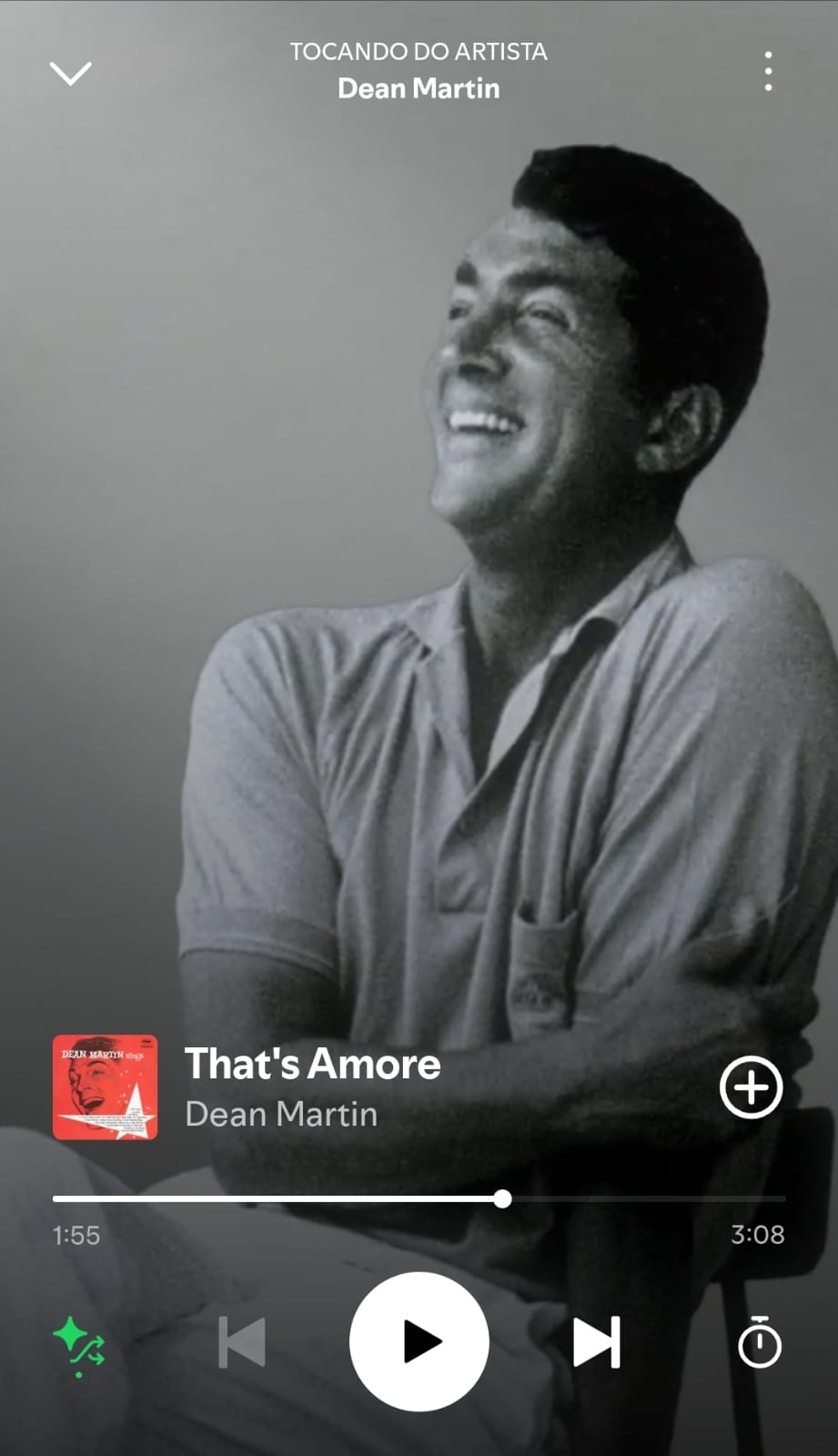
“That’s Amore” by Dean Martin is one of those songs that you know but don’t know where it comes from. Released in 1953, the track has since become more than a pop standard — it is practically a cultural landmark. With its playful lyrics, lilting melody, and Martin’s effortless charm, the song embodies a certain romantic fantasy of Italy that resonated not only with Italian-Americans but with audiences worldwide.
For many, “That’s Amore” is the very definition of an old-world love song. It’s the kind of tune that instantly paints a picture of candlelit dinners, red wine, and cobblestone streets under a Mediterranean moon. Even if you’ve never been to Italy, the song makes you feel like you’ve lived it.
Dean Martin – The King of Cool
Before diving into the song itself, it’s worth remembering who Dean Martin was. Born Dino Paul Crocetti in 1917 to Italian immigrant parents in Ohio, Martin rose from humble beginnings to become one of the most beloved entertainers of the 20th century.
He first gained fame as part of the comedy duo Martin and Lewis with Jerry Lewis, dominating stages, radio, and early television. But Martin wasn’t just a comedian — his smooth baritone voice carried him into a parallel career as a singer. Known as the “King of Cool,” he rivaled contemporaries like Frank Sinatra and Bing Crosby, not by out-singing them, but by making every performance look effortless.
The Birth of That’s Amore
“That’s Amore” was written by Harry Warren (music) and Jack Brooks (lyrics) in 1953 and debuted in the comedy film The Caddy, starring Martin and Jerry Lewis. Dean performed it in the movie, and it quickly became one of his signature songs.
The track was nominated for an Academy Award for Best Original Song in 1954, and though it didn’t win, it skyrocketed in popularity, eventually becoming synonymous with Martin’s image. More than just a song, it became part of his persona — suave, humorous, and irresistibly charming.
The Sound of That’s Amore
Musically, the song blends traditional pop ballad structure with Italian folk influences. The mandolin introduction sets the scene immediately, conjuring images of Naples or Rome before Martin even sings a note. The tempo is waltz-like, with a gentle sway that makes it perfect for dancing.
Then there’s Martin’s delivery: relaxed, confident, and full of warmth. His phrasing carries just enough humor to make the lyrics playful without losing their sincerity. It’s a delicate balance that only Dean Martin could pull off — too much comedy, and it would have been parody; too much seriousness, and it would have lost its charm.
Talk Nerdy to Me: A Music Theory Perspective
From a music theory standpoint, “That’s Amore” is interesting because of how it borrows from both American pop and Italian folk traditions. The song is in a major key, built around simple I-IV-V progressions that keep it accessible and familiar. But the melody often leaps in intervals rather than moving stepwise, mimicking the dramatic gestures of Italian opera.
The waltz rhythm (3/4 time) gives the song its distinctive sway, contrasting with the more common 4/4 rhythms of American pop at the time. Instrumentation is equally important: the mandolin provides cultural flavor, while strings and accordion fill in lush harmonies.
For musicians, the song is a reminder that cultural fusion — even something as simple as mixing folk motifs with pop structure — can create timeless music.
Cultural Impact
“That’s Amore” quickly became one of the most iconic songs of the 1950s. For Italian-Americans, it was both a proud nod to their heritage and a playful exaggeration of Italian stereotypes. For mainstream audiences, it was an invitation into a world of romance, food, and music that felt exotic yet approachable.
Over the decades, the song has appeared in countless films, commercials, and TV shows. Perhaps its most famous modern use is in Moonstruck (1987), where it plays during the opening credits, perfectly setting the tone for the Italian-American love story starring Cher and Nicolas Cage.
Even today, the phrase “When the moon hits your eye like a big pizza pie, that’s amore” is instantly recognizable, often referenced in pop culture as shorthand for romance — or sometimes just for Italy itself.
Comparisons and Legacy
While Dean Martin recorded many romantic ballads, “That’s Amore” stands apart for its playfulness. Frank Sinatra’s love songs tended to lean toward sophistication and longing, while Martin’s big hit was lighter, more humorous, and more down-to-earth.
The song also contributed to Martin’s lasting reputation as the charming, easygoing crooner — the man who could turn everyday life (and even pizza) into poetry. Decades later, the song still holds its place as one of the ultimate romantic standards.
Personal Note
For me, “That’s Amore” is one of those songs that feels timelessly familiar, even if you’re hearing it for the first time. I remember catching it in Moonstruck and instantly recognizing its melody, as though it had always been part of my memory. “That’s Amore” transports me into a cinematic version of Italy, where love and laughter are around every corner.
It’s not just a song — it’s a mood, a smile, a warm glass of red wine under the stars.
Other Great Songs by Dean Martin
- Volare (Nel blu dipinto di blu) – Martin’s version of Domenico Modugno’s classic became a hit in the U.S., combining Italian roots with his smooth crooner style.
- Everybody Loves Somebody – Another signature Dean Martin track, which knocked The Beatles off the #1 spot in 1964.
- Sway – A Latin-inspired number that showcases Martin’s versatility and irresistible charm on the dancefloor.




1 comentário em “2025InSongs #176 Dean Martin – That’s Amore”