
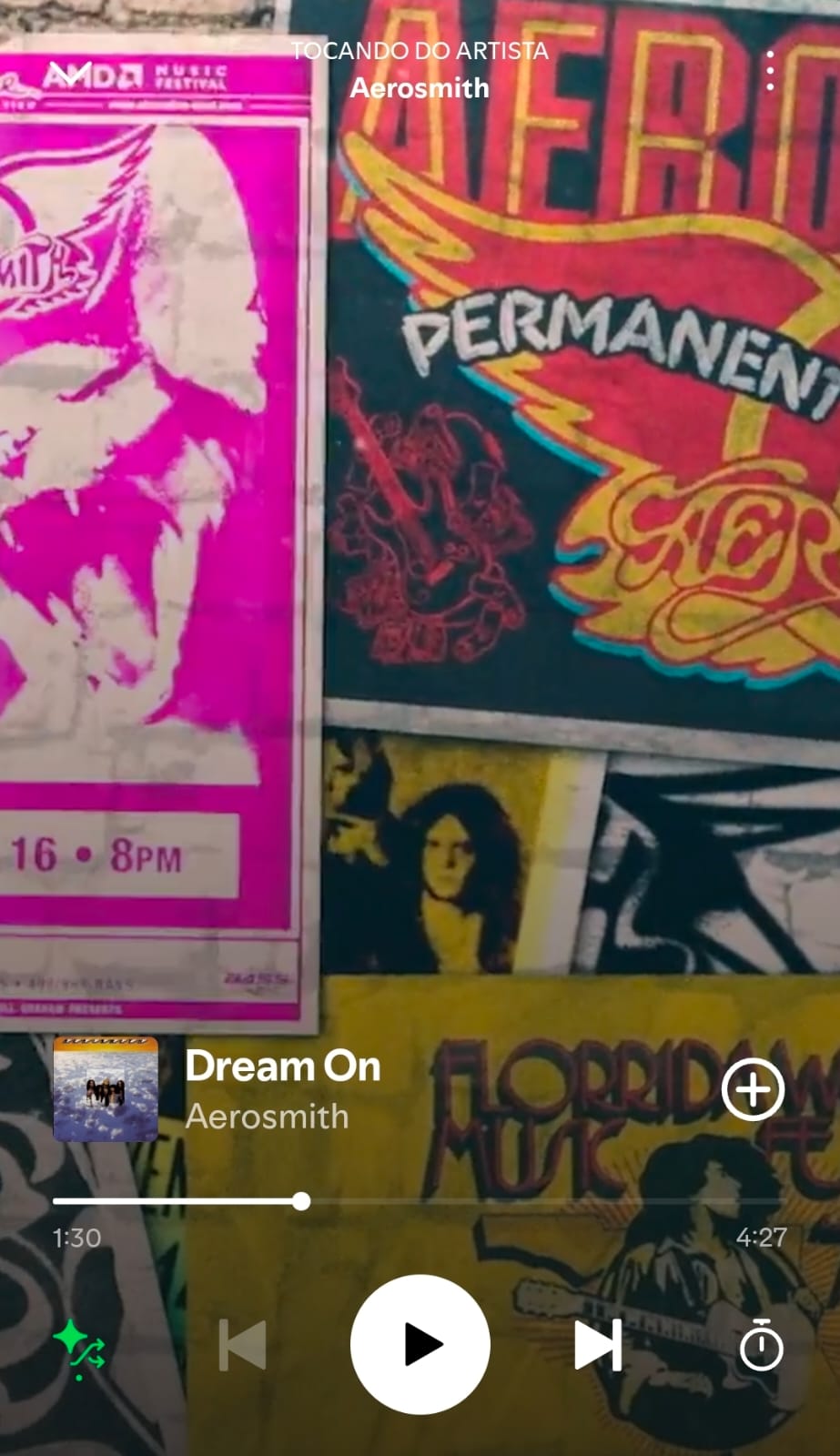
It’s been a while since the last song posted was chosen because I woke up with it in my mind for no reason at all. This time, it was “Dream On” by Aerosmith, a song that somehow feels as eternal as rock itself.
There are songs that you simply listen to, and there are songs that define who you are. “Dream On” belongs to the second group. It is a song about time, ambition, and the fragile line between youth and experience. Every time it plays, it feels brand new, even though it first came out in 1973.
Part of the band’s self-titled debut album, “Dream On” was the moment when Aerosmith stopped being just another hard rock band and became a legend in the making. It’s poetic and fierce, soft and explosive, a ballad and a roar all at once.
Who Are Aerosmith
Aerosmith formed in Boston in 1970 when Steven Tyler, Joe Perry, Tom Hamilton, Joey Kramer, and Brad Whitford came together to create something that blended blues, hard rock, and unfiltered emotion. The chemistry was instant. Tyler’s wild charisma and Perry’s gritty guitar style gave the band its unmistakable sound.
Their debut album Aerosmith was modest in its initial impact, but it carried within it a seed that would grow into one of the greatest careers in rock history. That seed was “Dream On.”
The song didn’t climb the charts right away. It was only a few years later, after the band had gained more exposure, that it reached the top 10 and became their first major hit. Looking back, it feels inevitable. Few debut singles capture such maturity and raw emotion.
The Sound of Dream On
“Dream On” starts with a haunting piano line that feels like a heartbeat, steady and reflective. Then come the strings of Joe Perry’s guitar, the rise of the bass, and finally Steven Tyler’s voice — fragile at first, but filled with emotion.
What makes the song unforgettable is how it builds. The verses are quiet and introspective, while the chorus explodes into passion and defiance. Tyler’s voice grows from a whisper into a scream, the sound of someone refusing to give up.
The production captures both power and intimacy. The piano grounds the melody in melancholy, while the guitar solos cut through like bursts of light. The rhythm section adds a sense of inevitability, pushing the song forward as if time itself were accelerating.
At its core, “Dream On” is about believing in yourself even when the world isn’t listening yet. It’s a message of persistence, wrapped in melody and pain.
Talk Nerdy to Me: A Music Theory Perspective
From a technical standpoint, “Dream On” is a masterclass in tension and release. The song is written in the key of F minor, which immediately gives it a darker, introspective tone. That key choice sets the emotional stage for lyrics about struggle and the passage of time.
The verse progression revolves around Fm, Db, Eb, and C — a circular movement that feels unresolved, mirroring the theme of reaching for something just out of grasp. The chorus then shifts harmonically, opening into brighter intervals that create a sense of transcendence. It is the musical equivalent of hope breaking through doubt.
The song’s tempo sits around 78 BPM, slow enough to let the emotions breathe but steady enough to maintain forward motion. The rhythm is built on a simple but powerful drum pattern that emphasizes space rather than speed.
Steven Tyler’s vocal range in this song is legendary. He begins in a tender mid-register, then soars more than two octaves higher during the final chorus, unleashing one of the most iconic rock screams ever recorded. That vocal climb mirrors the song’s theme — a literal rise from quiet determination to triumphant self-belief.
The layering of piano, guitar, and orchestration adds a symphonic dimension that makes the track feel larger than life. It is both grounded in blues structure and elevated by ambition.
Cultural Resonance
When “Dream On” was released, it didn’t immediately dominate the charts, but it did something more important: it planted Aerosmith’s flag as a serious musical force. Over time, the song became their anthem and one of the defining power ballads in rock history.
For many fans, it captures the universal truth of chasing something bigger than yourself. Whether you’re a young musician trying to make it or simply someone dreaming of a better tomorrow, “Dream On” speaks directly to that hunger.
The song re-emerged in popularity throughout the decades. In the 1980s and 1990s, it became a staple of classic rock radio, and in the 2000s, it found new audiences through films, commercials, and live performances.
Its timelessness lies in its sincerity. There’s no gimmick or trend-chasing here. It’s a song built on pure feeling, which is why it continues to resonate across generations.
Steven Tyler often says that “Dream On” is about his own journey — about holding onto faith in himself before fame arrived. You can feel that truth in every line.
Comparisons and Legacy
Within Aerosmith’s discography, “Dream On” stands as the cornerstone. It’s the foundation upon which their later success was built. Without it, there might never have been “Sweet Emotion” or “Walk This Way.”
It is often compared to “Stairway to Heaven” by Led Zeppelin for its slow build, emotional storytelling, and explosive climax. Both songs capture the idea of music as a journey rather than a product.
Over the years, “Dream On” has been covered by countless artists and featured in multiple films and television shows. Each interpretation highlights its universal message: the persistence of hope.
The song also became a defining live moment for Aerosmith. Tyler’s final scream at the end of the performance is not just a vocal feat; it is a declaration. Even after decades, the band still performs it with the same fire they had when they started.
Why Dream On Stands Out
What makes “Dream On” timeless is how personal and universal it feels at the same time. It is introspective without being self-indulgent, ambitious without being pretentious.
Steven Tyler’s voice carries a rawness that few singers can match. Every word sounds lived in, every note feels earned. The lyrics “Dream until your dreams come true” might sound simple, but in the context of the song, they become a mantra for perseverance.
Musically, it bridges generations. Fans of classic rock love its authenticity. Younger audiences are drawn to its cinematic quality and emotional depth. It’s a rare song that belongs equally in smoky bars and in symphony halls.
Ultimately, “Dream On” is a reminder that greatness comes from patience, struggle, and faith. It’s not just a song about dreaming; it’s a song about not giving up on those dreams, even when the odds seem impossible.
Other Great Songs by Aerosmith
- Sweet Emotion – A groove-heavy rock classic that defined the sound of 1970s Aerosmith.
- Walk This Way – A genre-blending hit that later bridged rock and hip-hop, proving the band’s versatility.
- Cryin’ – A passionate 1990s power ballad showcasing Aerosmith’s ability to reinvent themselves for new generations.
What about you? Do you remember the first time you heard “Dream On” and felt that mix of nostalgia and hope?
Share your thoughts in the comments and send this post to a friend who loves when music feels timeless and alive.




1 comentário em “2025InSongs #212 Aerosmith – Dream On”