
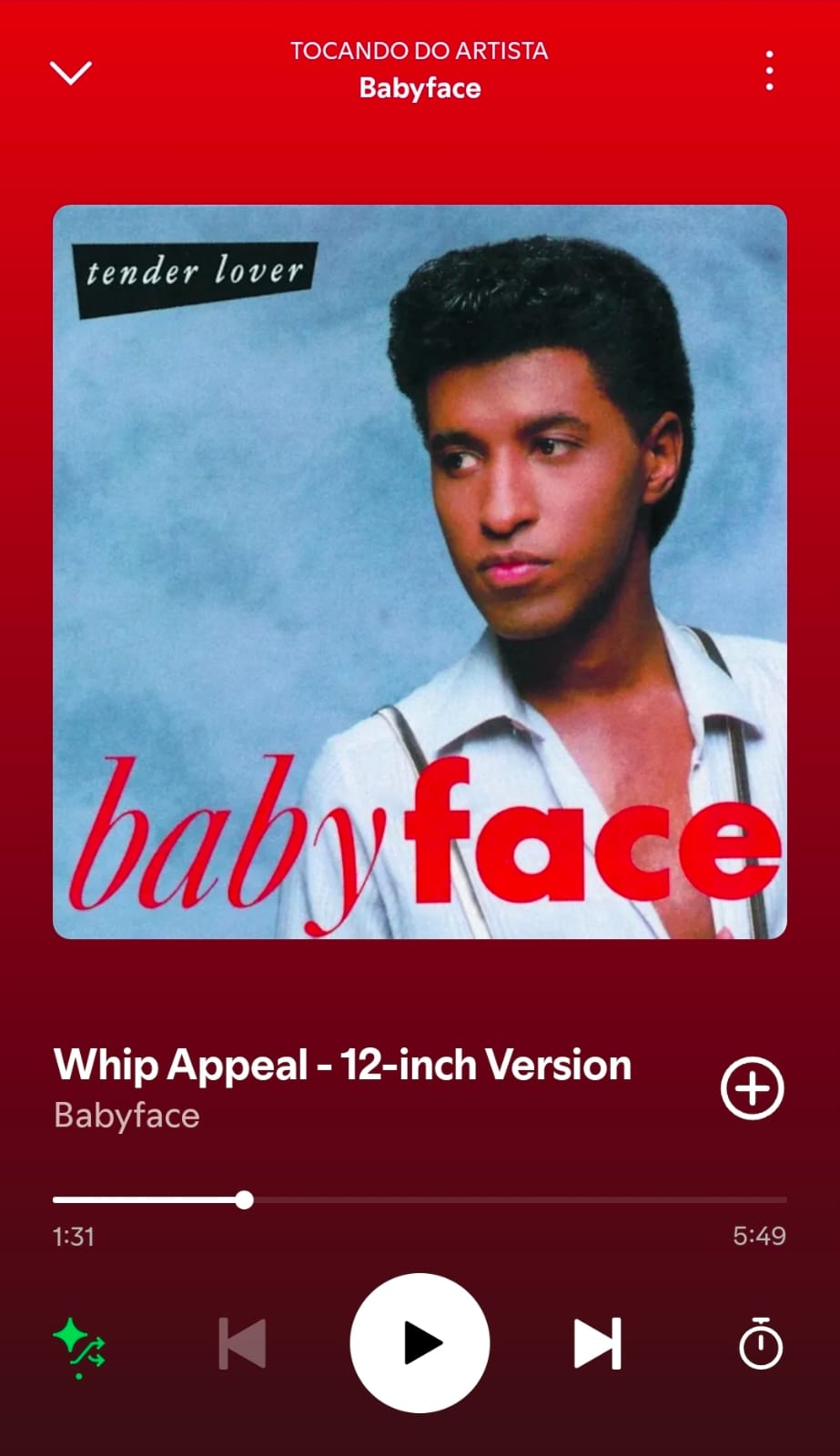
Every once in a while, a song captures the very essence of what makes R&B so intoxicating. For Babyface, that moment came with “Whip Appeal”. Released in 1990 as part of his second studio album Tender Lover, this track didn’t just showcase his signature smooth vocals but also redefined what sensuality in music could sound like.
At a time when R&B was evolving into a more polished, emotionally sophisticated genre, “Whip Appeal” stood out. It wasn’t loud or dramatic. Instead, it seduced listeners with elegance, subtlety, and an undeniable groove. More than thirty years later, it still feels as fresh and seductive as ever.
“Whip Appeal” is a masterclass in restraint. It’s a slow burn that invites you in, and once you’re there, you never want to leave.
Who Is Babyface
Kenneth “Babyface” Edmonds is one of the most influential figures in modern R&B and pop music. As a singer, songwriter, and producer, his impact stretches far beyond his own discography. He has written and produced hits for legends such as Whitney Houston, Toni Braxton, Boyz II Men, Madonna, and Mariah Carey.
By the time “Whip Appeal” was released, Babyface had already established himself as a musical architect. His debut album Lovers (1986) hinted at his potential, but it was Tender Lover that turned him into an icon. The album blended emotional storytelling, lush production, and romantic sophistication into something unmistakably his own.
With “Whip Appeal”, he proved that sensuality could be elegant and that passion could sound classy. It wasn’t about flash or excess; it was about control, groove, and feeling.
The Sound of Whip Appeal
From the very first seconds, “Whip Appeal” announces its intentions. The soft, shimmering keys and the relaxed drum machine beat create a warm, intimate space. Then Babyface’s voice enters, smooth as silk but with just enough grit to make it human.
The groove is slow and steady, but it never drags. Every sound has a purpose: the gentle rhythm guitar adds texture, the bass line gives it body, and the background harmonies elevate the atmosphere to pure romance.
The chorus is pure gold. When Babyface sings “You got that whip appeal, so whip it on me, baby”, it’s seductive without being crude. It’s flirtation turned into poetry.
One of the reasons the song feels timeless is its production. The 90s R&B sound often leaned into lush, synthesized arrangements, but Babyface balanced that with organic warmth. The song feels alive, full of space and subtle movement, like a conversation between two people who already know the outcome.
Talk Nerdy to Me: A Music Theory Perspective
From a musical standpoint, “Whip Appeal” is built around sophistication disguised as simplicity. The song is in the key of E minor, giving it a smooth, slightly mysterious tonality that perfectly complements the romantic theme.
The chord progression cycles between Em7, A9, Dmaj7, and Gmaj7, creating a sequence that feels both sensual and unpredictable. Those major sevenths give the song its soft edges and jazzy undertones, while the use of suspended chords adds a sense of anticipation.
The tempo sits around 84 BPM, slow enough to encourage sway and intimacy but steady enough to groove. The drum pattern relies on gentle syncopation, placing the snare hits just behind the beat to create that relaxed, almost lazy pocket that defines Babyface’s sound.
Vocally, the song is a study in dynamics. Babyface never over-sings. He uses his tone like an instrument, moving effortlessly between tender falsetto and silky mid-range. The harmonies in the chorus are layered to perfection, enhancing emotion without overwhelming it.
Harmonically, “Whip Appeal” works because it blurs the line between tension and release. The chords never fully resolve until the final measures, keeping the listener suspended in a state of musical desire. It’s not just a song you hear; it’s a song you feel in rhythm and breath.
Cultural Resonance
When “Whip Appeal” was released, it became an instant classic. The single peaked at number six on the Billboard Hot 100 and reached number two on the R&B charts, marking one of Babyface’s biggest solo hits.
But more than chart success, the song helped define what sophisticated R&B would sound like throughout the 1990s. It paved the way for artists like Toni Braxton, Maxwell, and D’Angelo, who would take sensuality and give it emotional weight.
“Whip Appeal” wasn’t about the club or the crowd. It was about connection — the intimate kind that happens when everything slows down, and two people find themselves lost in each other’s rhythm.
The song also helped solidify Babyface’s reputation as the ultimate smooth operator of R&B. His delivery combined confidence with gentleness, and his songwriting carried both emotional and physical allure.
Even today, “Whip Appeal” is a reference point for how to write a romantic song that feels mature and timeless. It appears regularly on playlists that celebrate the golden age of R&B, and its influence can still be heard in contemporary soul and pop productions.
Comparisons and Legacy
Within Babyface’s career, “Whip Appeal” sits at the crossroads of artistry and commercial appeal. It’s refined but catchy, intimate but radio-friendly. It embodies everything that made Babyface such an important figure in the evolution of R&B.
It also represents the transition from the funk-driven 80s sound to the smoother, more sensual textures that dominated the 90s. While artists like Prince and Janet Jackson explored bold rhythmic experiments, Babyface chose subtlety, and that choice made all the difference.
His legacy extends far beyond his own recordings. He became the voice behind an entire generation of love songs, from “End of the Road” by Boyz II Men to “Breathe Again” by Toni Braxton. But “Whip Appeal” remains special because it’s purely him — the producer, the singer, the writer, all working in perfect harmony.
Even now, more than three decades later, the song continues to attract new listeners. Its smooth production and universal theme of attraction make it timeless. It’s one of those songs that never sound dated, no matter how many times music trends change.
Why Whip Appeal Stands Out
What makes “Whip Appeal” truly stand out is how it feels both intimate and grand. It’s not just a love song; it’s a sensory experience. Every note, every lyric, every breath is intentional.
Babyface’s delivery is restrained yet emotionally charged. He doesn’t beg or boast; he simply invites. The result is a performance that feels confident, romantic, and deeply human.
Musically, the song’s genius lies in its space. Nothing feels crowded or forced. The groove breathes. The melody floats. It’s proof that less really can be more when every element is perfectly placed.
It’s also one of those rare songs that bridges generations. Listeners who first heard it in 1990 still play it today, and younger audiences continue to discover its timeless charm. That is the mark of true craftsmanship.
Ultimately, “Whip Appeal” captures the essence of Babyface’s artistry: smooth, soulful, and effortlessly sophisticated.
Other Great Songs by Babyface
- When Can I See You – A heartfelt acoustic ballad that highlights Babyface’s vulnerability and melodic genius.
- Every Time I Close My Eyes – A lush, romantic anthem featuring Stevie Wonder on harmonica.
- Tender Lover – The title track from his breakthrough album, a perfect blend of groove, charm, and storytelling.
What about you? Do you remember the first time you heard “Whip Appeal” and realized how effortlessly soulful Babyface could be?
Share your thoughts in the comments and send this post to someone who appreciates smooth, timeless R&B.