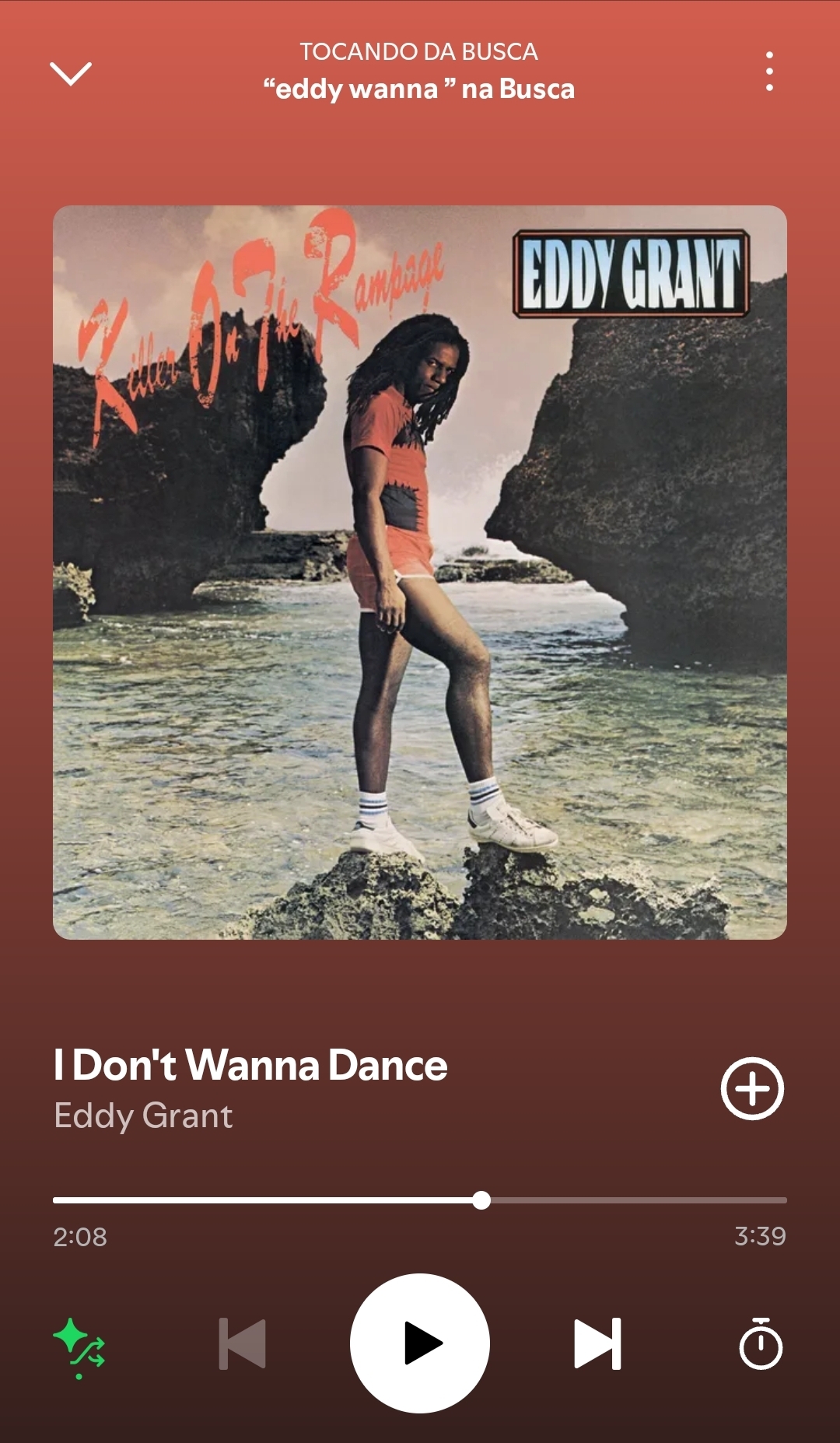
This song started playing on the radio. I did not know it, but when I realized, I was singing along to it happily. That is the magic of “I Don’t Wanna Dance” by Eddy Grant. It sneaks up on you, wraps you in rhythm, and suddenly you are smiling without realizing why.There is something universal about that experience. A song you think you do not know, but your body recognizes immediately. Your voice follows before your brain catches up. “I Don’t Wanna Dance” lives exactly in that space between familiarity and discovery.Released in 1982, the track became one of Eddy Grant’s biggest international hits. It blends reggae, pop, and new wave into a sound that feels light, infectious, and impossible to resist. Even decades later, it still feels fresh, playful, and deeply human.Who Is Eddy GrantEddy Grant is one of those artists whose influence stretches far beyond a single hit. Born in Guyana and raised in the United Kingdom, he became a key figure in bringing Caribbean rhythms into mainstream pop and rock music.Before his solo success, Grant was a founding member of the band The Equals, one of the first racially integrated groups to find major success in the UK. That background shaped his musical vision, which has always embraced hybridity, rhythm, and accessibility.As a solo artist, Eddy Grant developed a sound that fused reggae, funk, pop, and rock with sharp songwriting and irresistible grooves. Songs like “Electric Avenue” and “Gimme Hope Jo’anna” proved that danceable music could also carry social awareness and cultural depth.“I Don’t Wanna Dance” sits slightly apart from his more politically charged work. It is lighter in tone, but no less important in defining his legacy as a master of joyful, rhythm driven songwriting.The Sound of I Don’t Wanna DanceFrom the first seconds, “I Don’t Wanna Dance” establishes its groove with confidence. A bouncing bass line anchors the song, while bright keyboards and crisp percussion create an upbeat, sun soaked atmosphere.The rhythm borrows heavily from reggae, but the production leans into pop clarity. The beat is clean and punchy, designed for radio without losing its Caribbean soul. This balance is one of Eddy Grant’s greatest strengths as a producer and songwriter.Vocally, Grant delivers the lyrics with warmth and humor. There is a playful contradiction at the heart of the song. He insists he does not want to dance, yet everything about the music invites movement. That tension is the joke, and it works perfectly.The chorus is instantly memorable, built around repetition and rhythmic emphasis rather than melodic complexity. It feels communal, like something meant to be sung along to by strangers who suddenly find themselves in sync.
Talk Nerdy to Me: A Music Theory PerspectiveFrom a music theory standpoint, “I Don’t Wanna Dance” is a lesson in how groove can carry a song. The track is centered in C major, a key associated with brightness and accessibility. That choice supports the song’s joyful tone and broad appeal.The chord progression is simple, cycling primarily through I, IV, and V chords. This harmonic simplicity allows the rhythm section to take center stage. Instead of dramatic chord changes, interest comes from syncopation and instrumental interplay.The tempo sits around 108 BPM, a comfortable mid tempo that encourages movement without urgency. The drum pattern emphasizes the offbeat, a classic reggae technique that creates a laid back yet propulsive feel.The bass line plays a crucial role. It is melodic, rhythmic, and forward moving, acting as both foundation and hook. The bass does not just support the harmony. It defines the song’s identity.Vocally, Eddy Grant stays within a moderate range, focusing on rhythmic phrasing rather than vocal acrobatics. His delivery aligns closely with the groove, reinforcing the song’s danceable nature even as the lyrics suggest resistance.The arrangement leaves space. Instruments enter and exit subtly, preventing the song from feeling crowded. This restraint ensures that the groove remains clear and inviting throughout.Cultural ResonanceWhen “I Don’t Wanna Dance” was released, it quickly climbed charts across Europe and beyond, reaching number one in the UK. Its success reflected a growing appetite for music that blended global rhythms with pop sensibility.The early 1980s were a time of stylistic crossover. New wave, reggae, funk, and pop were colliding in exciting ways. Eddy Grant stood at the center of that convergence, offering music that felt inclusive rather than niche.The song’s lasting appeal lies in its emotional simplicity. It does not demand deep interpretation. It offers joy, humor, and rhythm. Sometimes that is exactly what listeners need.Decades later, “I Don’t Wanna Dance” still appears on radio playlists, party soundtracks, and nostalgic compilations. Its ability to generate instant smiles has not faded.The experience of unknowingly singing along speaks to its cultural imprint. Even listeners who cannot name the song often know its melody and chorus. That kind of embedded familiarity is rare and powerful.Place Within Eddy Grant’s CatalogWithin Eddy Grant’s body of work, “I Don’t Wanna Dance” represents his lighter side. While songs like “Gimme Hope Jo’anna” address serious themes, this track focuses on mood and movement.That contrast is important. It shows Grant’s versatility and understanding of balance. He knew when to speak and when to simply make people dance. Both approaches are equally valuable.The song also highlights his talent as a producer. The clarity of the mix, the tightness of the rhythm, and the restraint of the arrangement all reflect a deep understanding of what makes pop music endure.Rather than relying on trends, Grant leaned into groove and melody. That decision has allowed the song to age gracefully.Why I Don’t Wanna Dance Stands OutWhat makes “I Don’t Wanna Dance” special is its honesty wrapped in humor. It captures the feeling of resistance melting into joy. Of pretending not to care and then caring completely.Musically, it proves that simplicity is not a weakness. When groove, melody, and rhythm align, complexity becomes unnecessary.Emotionally, the song is generous. It does not ask much from the listener. It gives freely. That generosity is what makes it memorable.For Eddy Grant, the track reinforces his place as a bridge builder. Between cultures, between genres, and between listeners who might not even realize how much music they already know.In the end, “I Don’t Wanna Dance” is a reminder that the best songs often bypass analysis and go straight to the body. You might think you do not know it. Then suddenly, you are singing along.Other Songs by Eddy GrantElectric Avenue – A defining hit that blends funk, reggae, and social commentary.Gimme Hope Jo’anna – A politically charged anthem with an unforgettable melody.Living on the Frontline – A groove driven track that showcases Grant’s rhythmic instincts