
Introduction
Pop Art was one of the most influential art movements of the 20th century, redefining the boundaries between high art and popular culture. Emerging in the mid-1950s and flourishing throughout the 1960s, Pop Art challenged traditional ideas about what art could be, who it was for, and what subjects were worthy of artistic attention. Instead of focusing on classical themes, abstraction, or emotional expression, Pop Art embraced imagery from mass media, advertising, comic books, consumer goods, and celebrity culture.
The movement began almost simultaneously in two different cultural contexts: the United Kingdom and the United States. In Britain, Pop Art developed as an intellectual response to post-war consumerism, influenced by American advertising and Hollywood imagery. The Independent Group, a collective of artists, architects, and critics based in London, played a key role in shaping early Pop Art ideas. Artists such as Richard Hamilton and Eduardo Paolozzi explored how mass-produced images were transforming everyday life.
In the United States, Pop Art reached its peak and became a cultural phenomenon. American artists reacted against Abstract Expressionism, which dominated the art world in the 1940s and 1950s. Instead of personal emotion and painterly gestures, Pop artists focused on mechanical reproduction, bold colors, and recognizable imagery. Figures like Andy Warhol, Roy Lichtenstein, Claes Oldenburg, and James Rosenquist became synonymous with the movement.
Pop Art peaked during the 1960s, particularly in New York City, where art, fashion, music, and media intersected. It reflected a rapidly changing society shaped by television, advertising, consumerism, and celebrity worship. By elevating everyday objects and popular icons into art, Pop Art permanently altered the course of modern and contemporary art.
Pop Art in Painting
Painting was the medium through which Pop Art gained its strongest visual identity. Pop artists used familiar images taken from advertisements, comic strips, product packaging, and mass media. These images were often enlarged, simplified, and reproduced using techniques that mimicked industrial printing processes, such as silkscreen.
Andy Warhol’s work is perhaps the most iconic example of Pop Art painting. His repeated images of Campbell’s Soup cans, Coca-Cola bottles, and celebrities like Marilyn Monroe highlighted the mass production of consumer goods and fame. Warhol’s use of repetition emphasized how images lose individuality and emotional depth through constant reproduction.
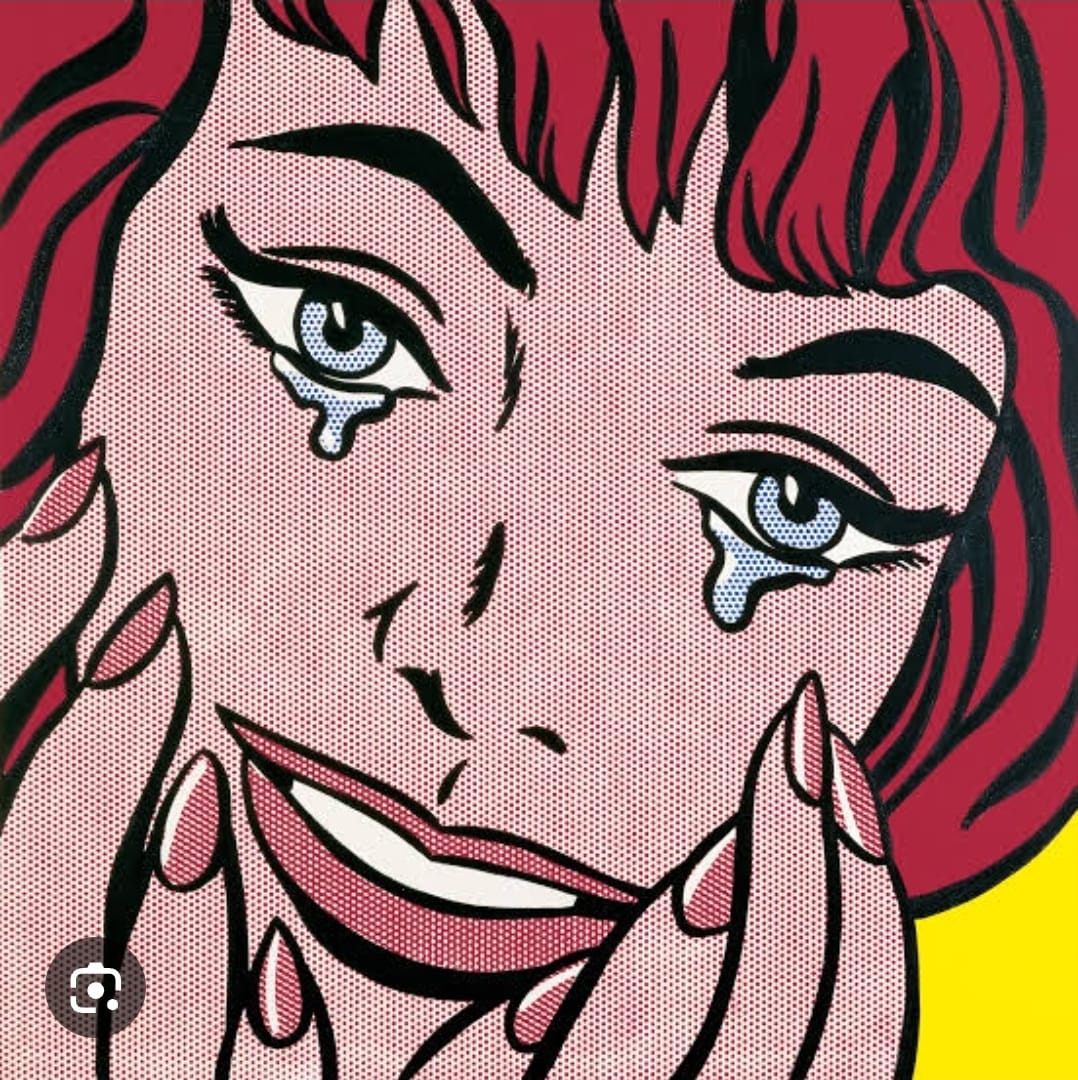
Roy Lichtenstein approached Pop Art through comic book imagery. His paintings reproduced panels from romance and war comics, complete with speech bubbles and Ben-Day dots. By isolating and enlarging these images, Lichtenstein transformed lowbrow popular culture into large-scale fine art while questioning originality and artistic authorship.
Pop Art painting rejected traditional notions of artistic skill and uniqueness. Instead, it celebrated surface, irony, and accessibility, making art more relatable to the general public.
Pop Art in Music
Pop Art’s influence extended beyond visual arts and into music, particularly during the 1960s and 1970s. Musicians began to embrace the same ideas of mass culture, repetition, and celebrity that defined the visual movement.
Andy Warhol played a direct role in the music scene by managing and producing the experimental rock band The Velvet Underground. Their music combined avant-garde sounds with themes drawn from urban life, media, and subculture, aligning closely with Pop Art’s aesthetic and philosophy.
Album covers also became an important intersection between Pop Art and music. Warhol’s famous banana cover for The Velvet Underground & Nico is one of the most recognizable examples. Other artists and bands adopted bright colors, graphic design, and pop imagery to create visually striking album art that functioned as both marketing and artistic expression.
Pop music itself reflected Pop Art values by embracing simplicity, repetition, and mass appeal. Songs were designed to be catchy, easily reproducible, and widely consumed, mirroring the movement’s focus on popular culture.
Pop Art in Fashion
Fashion was another area deeply influenced by Pop Art. Designers began incorporating bold colors, graphic patterns, and imagery inspired by advertising and comic books. Clothing became a canvas for visual experimentation and cultural commentary.
In the 1960s, fashion designers like Mary Quant and Pierre Cardin embraced Pop Art aesthetics through geometric shapes, synthetic materials, and vibrant color palettes. Dresses featured prints of everyday objects, slogans, and pop icons, reflecting the movement’s playful and rebellious spirit.
Pop Art fashion rejected traditional elegance in favor of youth culture and mass production. Ready-to-wear clothing aligned with the movement’s democratic approach to art, making bold design accessible to a wider audience. The fusion of art and fashion helped blur the lines between creative disciplines and reinforced Pop Art’s presence in everyday life.
Pop Art in Architecture
Although less prominent than in painting or fashion, Pop Art also influenced architecture and design. Architects and designers began incorporating elements of popular culture, commercial signage, and industrial materials into their work.
Pop-influenced architecture often featured bright colors, bold forms, and playful references to consumer culture. Buildings and interiors borrowed visual language from diners, gas stations, and shopping malls, embracing the aesthetics of modern urban life.
This approach challenged the seriousness of modernist architecture by introducing humor, symbolism, and cultural references. The influence of Pop Art in architecture can also be seen in interior design, where everyday objects were reimagined as decorative or functional art pieces.
Pop Art in Literature
Pop Art’s impact on literature was more conceptual than visual, but equally significant. Writers began experimenting with themes of mass media, consumerism, and celebrity culture, often using fragmented narratives and repetition.
Authors influenced by Pop Art incorporated advertising slogans, brand names, and pop references into their writing. This approach mirrored the way Pop artists borrowed images from popular culture. The writing style often reflected the fast-paced, image-saturated world of television and print media.
Pop Art literature questioned originality and authorship, echoing the movement’s visual focus on reproduction and mass communication. It also blurred the line between high and low culture, bringing everyday language and popular references into serious literary contexts.
Conclusion
Pop Art was more than an art movement; it was a cultural shift that redefined how society viewed art, media, and consumer culture. By embracing popular imagery and mass production, Pop Art challenged traditional artistic hierarchies and made art more accessible and relatable.
From painting and music to fashion, architecture, and literature, Pop Art left a lasting legacy across creative disciplines. Its influence continues today in contemporary art, advertising, graphic design, and digital media. In a world still dominated by images, brands, and celebrity culture, the ideas behind Pop Art remain as relevant as ever.

1 comentário em “2025InArt #11 Pop Art”