
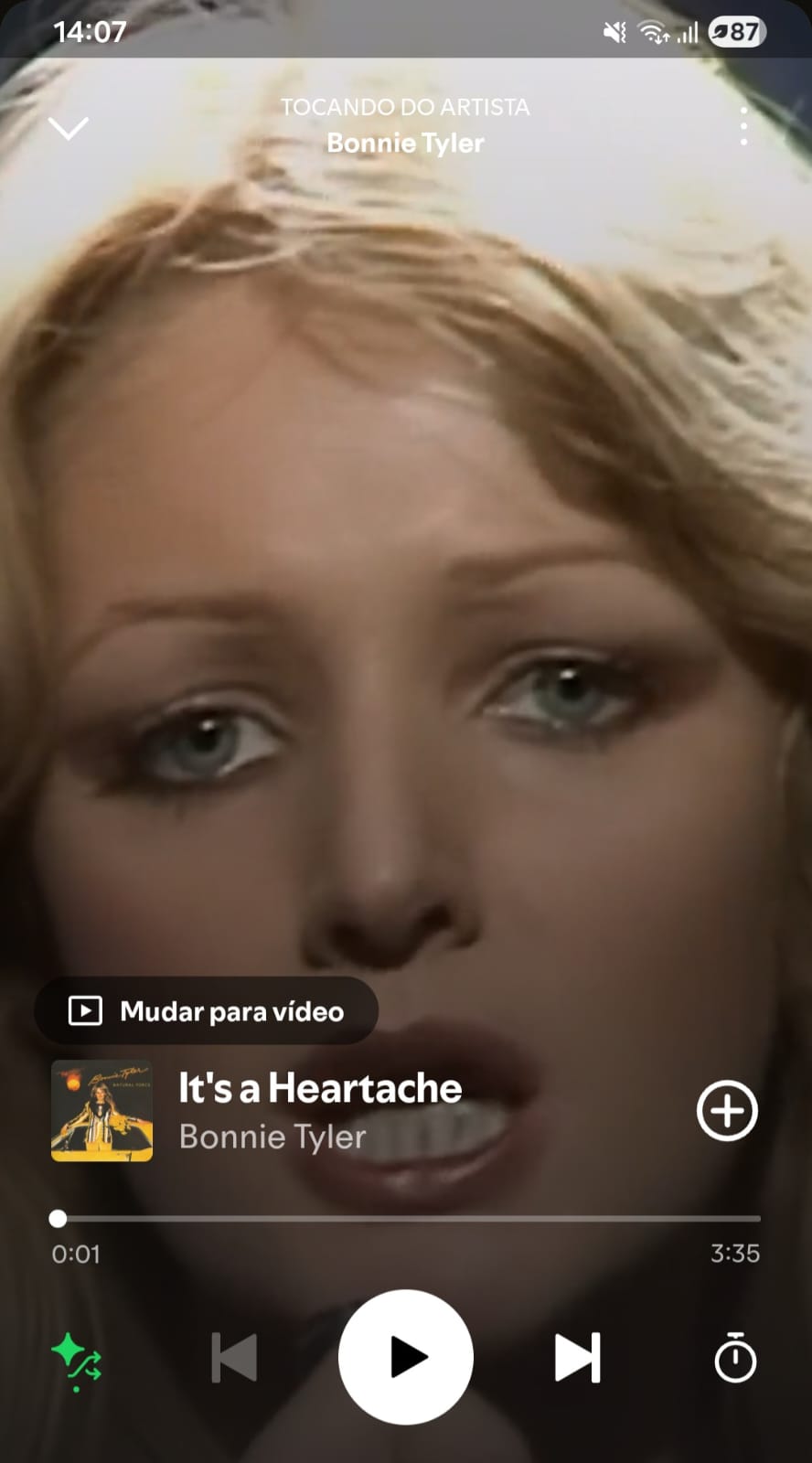
I have no idea why I got up with this song on my mind. No radio the night before, no playlist looping in my sleep, no obvious trigger. Just that raspy opening line echoing somewhere between the kitchen and the first cup of coffee. It’s A Heartache is one of those songs that doesn’t ask for permission to show up. It simply does. And once it’s there, it refuses to leave quietly.
This is the kind of song that feels older than your own memories, even if you weren’t around when it first hit the charts. Released in 1977, It’s A Heartache is deeply rooted in that late-70s pop-rock crossover moment, where country inflections, soft rock arrangements, and emotional excess all lived comfortably together. Bonnie Tyler’s voice is the undeniable center of gravity here. It’s raw, slightly broken, and emotionally exposed in a way that feels almost accidental, like she’s not performing heartbreak but stumbling into it.
A voice that defines the song
You can talk about the melody, the lyrics, or the production choices all day, but none of it matters without Bonnie Tyler’s voice. That husky, cracked timbre is not something you forget. It doesn’t aim for perfection. It leans into vulnerability. In a decade where polished vocals were becoming the norm, Tyler sounded human in a way that bordered on fragile.
That’s probably one of the reasons this song has a feeling of childhood for me. Not because I understood the lyrics back then, but because voices like this stick with you before meaning does. As a kid, you don’t analyze heartbreak. You just feel the sadness in the sound, the weight in the phrasing, the way certain notes seem to carry more pain than words ever could.
It’s A Heartache played in the background of life. On the radio. In someone else’s car. In rooms where adults talked about things you didn’t yet understand. That’s how childhood memory often works: soundtracks without context, emotions without explanation.
Why this song keeps resurfacing
There are songs that come back to you because something reminded you of them. And then there are songs like this one, which appear uninvited. You wake up, and there it is. No explanation required.
Maybe it’s because It’s A Heartache sits right at the intersection of simplicity and intensity. The lyrics are almost painfully direct. No metaphors to decode, no poetic detours. Just emotional statements laid bare. That kind of honesty ages well. It doesn’t depend on trends or references. Heartbreak, disappointment, and resignation don’t really change with time.
And somehow, even if you’re not heartbroken, the song still works. It doesn’t demand that you match its emotion. It simply offers it, like a familiar old story you’ve heard many times but still listen to again.
Talk nerdy to me: a music theory perspective
From a music theory standpoint, It’s A Heartache is a great example of how simplicity can amplify emotional impact. The song is built around a straightforward chord progression in a minor key, relying heavily on diatonic harmony rather than complex modulation. This creates a sense of emotional stability, almost inevitability, that mirrors the resignation expressed in the lyrics. The melody stays mostly within a comfortable range, but strategically leaps upward on emotionally charged words, allowing Bonnie Tyler’s voice to crack and strain just enough to feel authentic rather than theatrical.
Rhythmically, the song maintains a steady, almost restrained pulse. There’s no rhythmic surprise here, and that’s intentional. The lack of syncopation or dramatic tempo shifts keeps the listener grounded, letting the vocal delivery carry the emotional arc. The instrumental arrangement supports this by using sustained chords and gentle dynamic swells instead of sharp accents. All of these choices work together to make the song feel honest and exposed, proving that emotional depth often comes from restraint rather than complexity.
A song that feels lived in
One thing that stands out when revisiting It’s A Heartache today is how lived-in it feels. It doesn’t sound like a studio experiment or a calculated attempt at a hit, even though it was one. There’s a weariness in the performance, a sense that the story being told has already happened and the singer is just reporting back from the aftermath.
That quality is probably why it sticks around in collective memory. Songs that feel too polished often age poorly. Songs that sound a little rough around the edges tend to age like photographs: imperfect, slightly faded, but emotionally precise.
For me, that connects directly to why it feels like childhood. Childhood memories are rarely sharp or detailed. They’re blurry, emotional impressions. A voice on the radio. A melody you can’t quite place. It’s A Heartache fits perfectly into that mental space.
Bonnie Tyler before the anthems
It’s also interesting to hear this song knowing what Bonnie Tyler would later become famous for. Massive, theatrical power ballads. Bigger arrangements. Bigger drama. This earlier hit feels more intimate by comparison. The pain is quieter here, less triumphant, more personal.
That contrast makes revisiting this track even more rewarding. You can hear the foundation of her later style, but stripped down. Less armor. More exposure.
Why it still matters
Listening to It’s A Heartache today isn’t about nostalgia alone. It’s about reconnecting with a kind of songwriting that trusted the listener to feel without being told how. No overproduction, no ironic distance, no self-awareness getting in the way.
I still don’t know why I woke up with this song in my head. Maybe I never will. But that mystery is part of the charm. Some songs don’t need reasons. They just resurface when they feel needed.
And when they do, they bring pieces of who we were with them. Childhood rooms. Old radios. Emotions we couldn’t name at the time but somehow understood anyway.
More from Bonnie Tyler
- Total Eclipse of the Heart (Turn Around) – a must sing along song.
- Holding Out For A Hero – this song screams 1980’s and it’s great.
- The Best – speaking of the 1980’s