
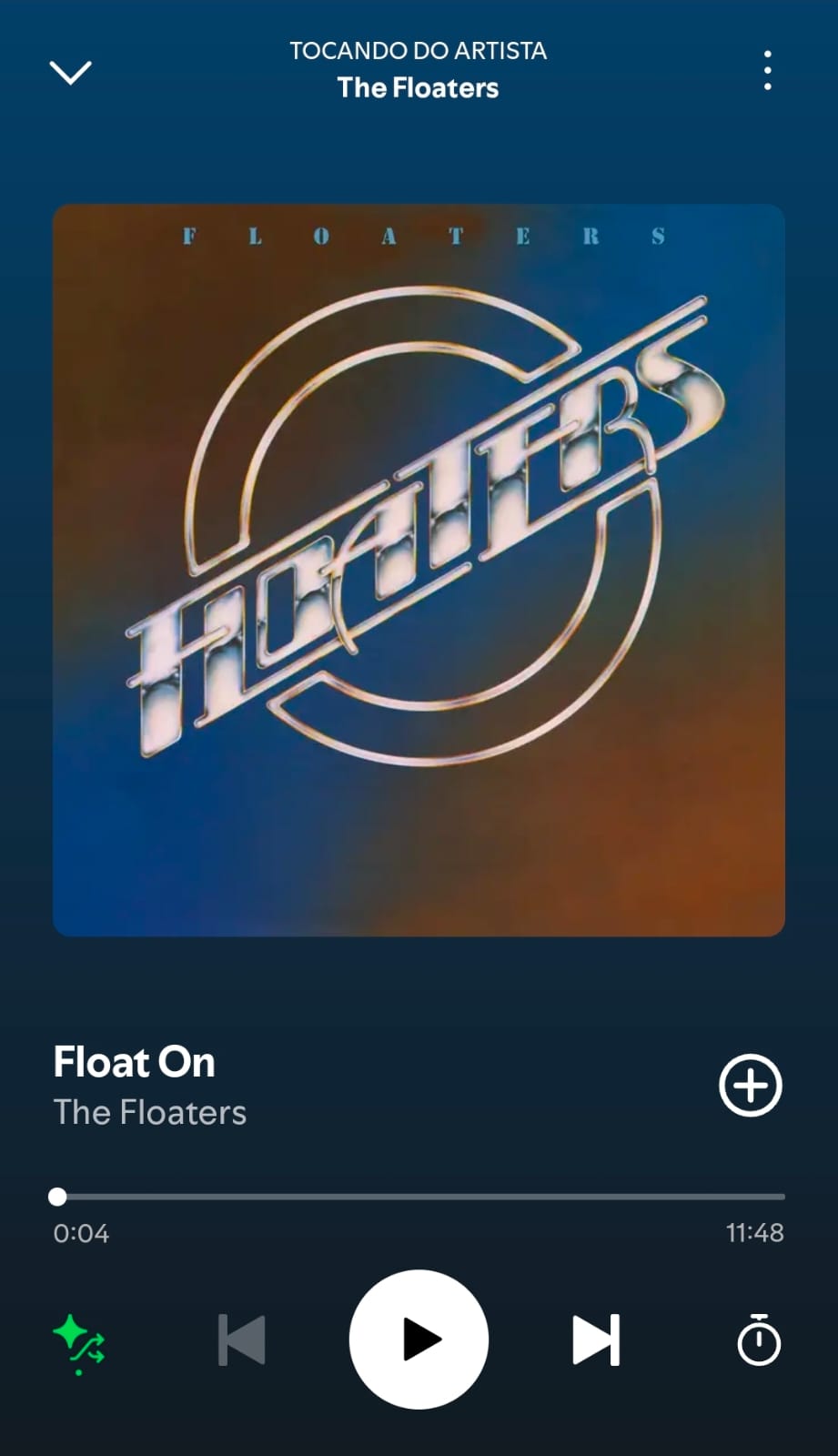
When I was little my dad used to play this song when he picked me up from school. I didn’t know the name back then, didn’t know who sang it, and definitely didn’t understand what it was about. I just knew how it felt. The car door closing, the afternoon light hitting the dashboard, and that smooth, unmistakable groove filling the space between us. Float On wasn’t background noise. It was part of the routine. And from time to time, I feel the need to come back to it.
Float On by The Floaters is one of those songs that carries memory in its rhythm. Released in 1977, it belongs to that late-70s soul era where warmth, groove, and personality mattered more than speed or volume. It’s confident without being aggressive, playful without being careless. Even today, it sounds like it knows exactly what it is.
A song that feels like a ride home
There’s something deeply cinematic about Float On. It feels like movement. Like cruising, not rushing. That might be why it stuck so strongly with me as a kid. Songs heard in cars have a special kind of permanence. They attach themselves to motion, to transition, to the feeling of going from one place to another.
When my dad played it, it wasn’t a big moment. No speeches, no explanations. Just music doing what music does best: filling space and shaping mood. The bassline was the first thing I noticed, even before I knew what a bassline was. It carried the song forward like it was guiding the car itself.
Listening to it now, that feeling comes back instantly. Not in sharp detail, but in atmosphere. That’s the kind of memory music is best at preserving.
The Floaters and personality-driven soul
The Floaters didn’t build their identity on complexity. Their magic came from clarity and character. Float On is famous for its spoken introductions, where each member announces their name and zodiac sign. It’s charming, slightly theatrical, and completely confident. That kind of personality-forward choice feels risky on paper, but it works because the groove underneath is rock solid.
The song blends soul, R&B, and a touch of funk, but it never feels crowded. Everything has room to breathe. The rhythm section locks in early and stays there, creating a foundation that allows the vocals to glide rather than compete.
That smoothness is probably why the song still feels good decades later. It doesn’t belong to a trend. It belongs to a feeling.
Why I keep coming back to it
From time to time I feel the need to come back to it. Not because I’m chasing nostalgia, but because some songs recalibrate you. Float On does that. It doesn’t demand emotional intensity. It doesn’t tell you how to feel. It just reminds you to move a little slower, to let things unfold.
There are periods where I don’t listen to it at all. And then, randomly, it comes back into rotation. Maybe on a drive. Maybe through a recommendation. And every time, it feels exactly right.
That’s how you know a song has staying power. It waits patiently.
Talk nerdy to me: a music theory perspective
From a music theory perspective, Float On is a masterclass in groove-based songwriting. The harmonic structure is relatively simple, relying on a repeating chord progression that establishes a stable tonal center early on. This harmonic consistency allows the listener to relax into the song without anticipating dramatic shifts. The real interest lies in the rhythmic interplay between bass, drums, and guitar. The bassline is melodic but restrained, outlining the harmony while adding subtle rhythmic syncopation that gives the track its forward motion. The drums maintain a steady pocket with minimal fills, reinforcing the song’s laid-back confidence. Vocally, the melody stays close to the chord tones, enhancing the smooth, conversational quality of the performance. The spoken sections add rhythmic contrast without disrupting the groove, functioning almost like another percussive element. All of this contributes to a song that feels effortless, even though it’s carefully constructed.
A sound tied to time, not trapped in it
Float On is unmistakably a product of its time, but it isn’t dated. That’s an important distinction. You can hear the late-70s soul influence in the production, the vocal harmonies, the groove choices. But none of it feels obsolete.
That’s probably why it still resonates across generations. You don’t need context to enjoy it. You don’t need to know the history. You just need to let it play.
For me, that ease is part of its emotional value. Life gets complicated. Music like this doesn’t add to that complexity. It smooths it out.
Three more songs by The Floaters worth checking out
If Float On resonates with you, here are three more tracks by The Floaters that are worth your time:
- You Don’t Have to Say You Love Me
A slower, more reflective track that leans into vulnerability while keeping the group’s signature smoothness intact. - Everything Happens for a Reason
A groove-driven soul song with optimistic undertones and strong ensemble vocals that showcase the group’s chemistry. - I Am So Glad I Took My Time
A deeper cut that emphasizes patience and emotional maturity, both lyrically and musically.
Why this song still matters to me
When I hear Float On now, I don’t just hear a classic soul track. I hear a moment of calm. A memory of being picked up from school. A reminder that not everything needs to be urgent.
Some songs grow with you. Others wait for you to come back. Float On does both. And every time I return to it, it feels like getting into the car, closing the door, and letting the ride take care of itself.