
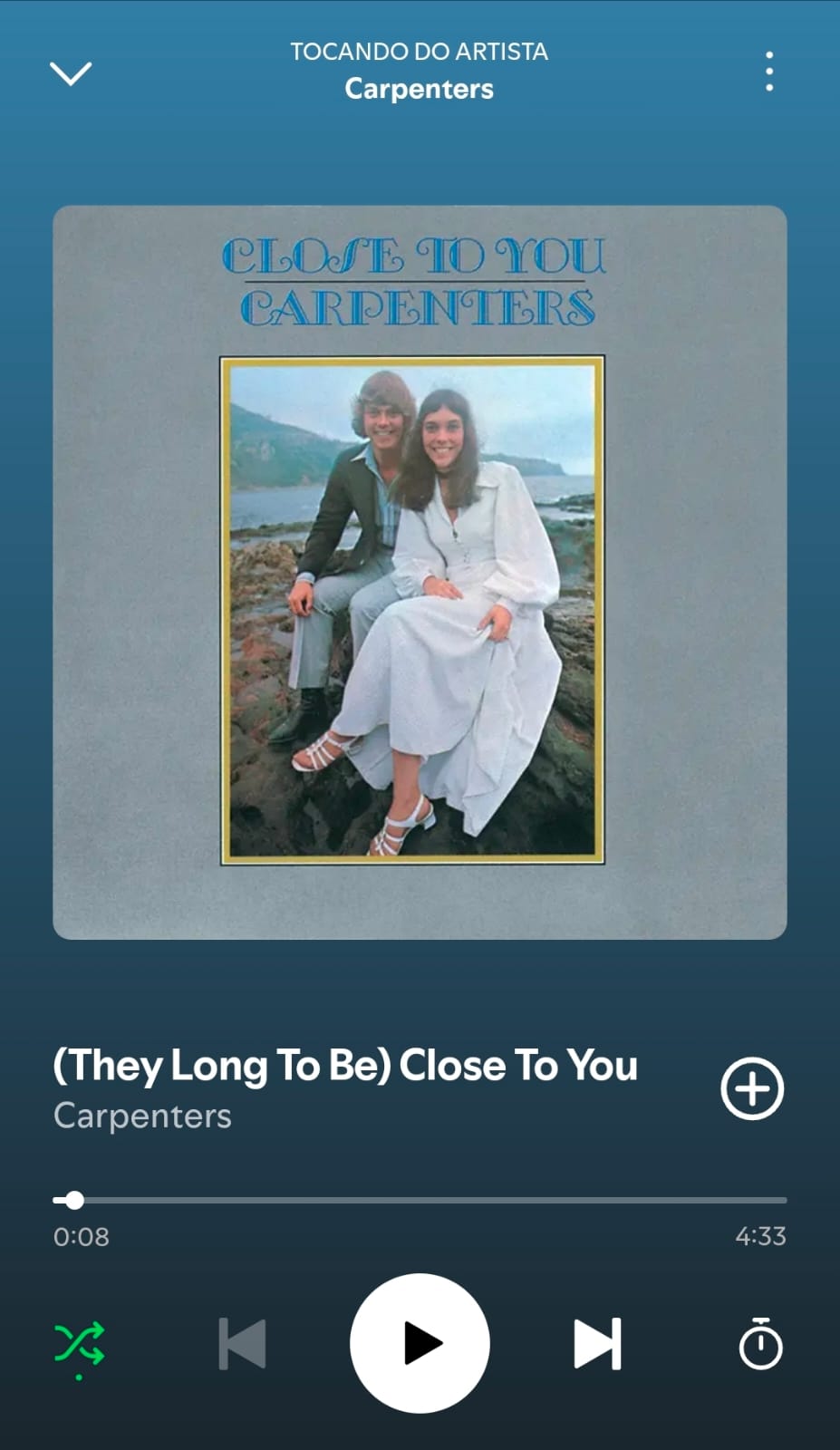
Some songs don’t ask for your attention. They gently take your hand and sit beside you. (They Long To Be) Close To You by Carpenters is one of those rare tracks that feels less like a performance and more like a quiet presence in the room. Released in 1970, this song became the duo’s breakthrough hit, but more than that, it became a kind of emotional shorthand for tenderness, intimacy, and calm.
There’s something almost cinematic about how this song exists in our collective memory. You don’t need to remember the first time you heard it; it feels like it’s always been there. For me, “Watching Trackstar on youtube introduces you to great songs like this one”, and this was one of those moments when the algorithm actually felt like it understood me. One listen was enough to trigger that familiar sensation: warmth, softness, and a subtle smile that creeps in without asking permission.
From the first piano notes to Karen Carpenter’s unmistakable voice, (They Long To Be) Close To You sounds like a Sunday morning filtered through sunlight and half-open curtains. “This one is definetely going to my sunday morning playlist,”, and it earns that spot effortlessly.
A Song That Changed Everything for Carpenters
Before Close To You, Carpenters were talented but still searching for their defining moment. Written by Burt Bacharach and Hal David, the song had already existed in other versions, but it was the Carpenters’ interpretation that unlocked its full emotional potential. Richard Carpenter’s arrangement stripped away excess and leaned into space, simplicity, and restraint.
Karen Carpenter’s vocal delivery is the centerpiece here. She doesn’t oversing, doesn’t decorate the melody unnecessarily. Her contralto voice feels grounded, intimate, and human. It’s almost conversational, as if she’s not performing to you, but rather with you. That approach helped push the song to number one on the Billboard Hot 100, cementing Carpenters as a defining act of early 1970s American pop.
Listening today, especially from a modern perspective in places like California or anywhere suburban and sunlit, the song still fits effortlessly into daily life. It sounds just as natural playing from a vinyl turntable as it does drifting out of laptop speakers while making coffee.
Why This Song Still Resonates Today
What makes (They Long To Be) Close To You timeless is its emotional honesty. The lyrics are simple, almost childlike, but they tap into a universal feeling: wanting closeness without complication. There’s no drama, no heartbreak, no grand resolution. Just longing, expressed gently.
In a world that often rewards loudness and urgency, this song reminds us that softness can be powerful. It’s the kind of track that doesn’t demand silence, yet improves everything around it when it’s playing. Driving slowly through a quiet neighborhood, folding laundry, or staring out the window on a calm morning — this song belongs in those moments.
That’s probably why discovering it through casual browsing feels so satisfying. It’s not framed as a “must-listen classic,” it just appears, and suddenly your day slows down in the best way possible.
Talk Nerdy to Me: A Music Theory Perspective
From a music theory standpoint, (They Long To Be) Close To You is a masterclass in simplicity and emotional efficiency. The song is primarily built around diatonic harmony, staying comfortably within the key and avoiding dramatic modulations. This choice reinforces the feeling of stability and warmth, making the listener feel safe and grounded.
The chord progressions rely heavily on familiar pop movements, particularly I–vi–IV–V relationships, which naturally evoke resolution and emotional comfort. What makes it special is the pacing. Chord changes are unhurried, giving each harmony time to breathe. The arrangement leaves space between phrases, allowing Karen Carpenter’s voice to float above the accompaniment without competition.
Melodically, the vocal line is smooth and stepwise, avoiding sharp leaps. This creates a conversational contour, mirroring the intimacy of the lyrics. The subtle use of orchestration — especially the iconic flugelhorn line — adds color without overwhelming the core structure. For musicians and producers, the song is a reminder that emotional impact often comes from restraint, not complexity.
More Songs by Carpenters You Should Listen To
If (They Long To Be) Close To You opened the door for you, there are plenty of other Carpenters songs that live in the same emotional universe:
- We’ve Only Just Begun – Another gentle classic that captures optimism and quiet hope with elegant arrangements and heartfelt vocals.
- Rainy Days and Mondays – Slightly more melancholic, but still intimate, showcasing Karen Carpenter’s ability to convey sadness without heaviness.
- Superstar – A slower, more reflective track that leans into vulnerability and longing, often considered one of their most emotionally powerful recordings.
Each of these songs expands on the same aesthetic: clean production, emotional clarity, and an unwavering commitment to sincerity.
A Personal Kind of Nostalgia
What’s striking about (They Long To Be) Close To You is how easily it integrates into personal routines. It doesn’t feel tied to a specific era, even though it clearly belongs to one. Instead, it adapts to your life. One day it’s background music; another day it’s the emotional anchor of the moment.
That’s why discovering it through modern platforms feels oddly appropriate. “Watching trackstar on youtube introduces you to great songs like this one” captures that experience perfectly — stumbling onto something old that suddenly feels new, relevant, and deeply personal.
Some songs demand analysis. Others demand volume. This one simply asks you to slow down. And when it does, you realize how rare and valuable that feeling really is.
In the end, (They Long To Be) Close To You isn’t just a classic pop song. It’s a reminder that music doesn’t always need to impress — sometimes it just needs to stay close.