
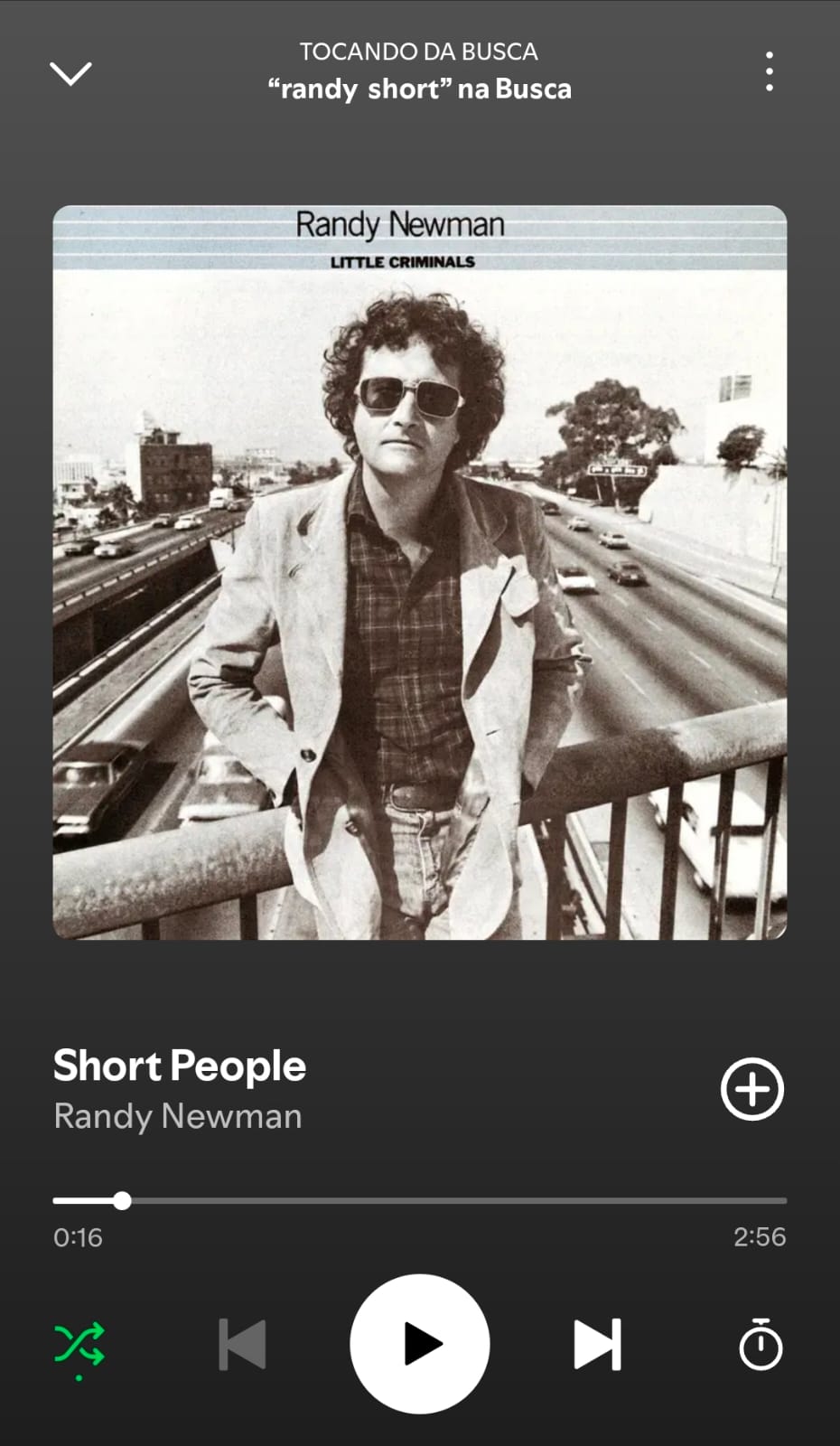
Some songs are famous for reasons that have very little to do with how good they actually are. Short People by Randy Newman is one of those songs. It’s often remembered as controversial, misunderstood, or simply odd. But when you listen closely, it reveals itself as something much sharper and more intentional. Maybe it’s kinda wrong for me as a tall man to find a song about short people a good song? That question alone already puts you in the right mindset to understand what Randy Newman was really doing.
I didn’t rediscover this track through a classic rock playlist or an oldies radio station. Fast track by Jack Coyne on YouTube is a great place to discover new music, even if it’s old music. In that context, Short People feels less like a relic and more like a reminder of how daring pop songwriting used to be.
Randy Newman: The Master of the Uncomfortable Song
Randy Newman has always written songs that make people uneasy. His gift lies in inhabiting characters that expose hypocrisy, prejudice, and moral blind spots. Importantly, those characters are rarely meant to be admired.
Short People, released in 1977 on the album Little Criminals, is a perfect example. On the surface, it sounds like a novelty tune. Underneath, it’s a biting satire aimed at irrational hatred and social cruelty.
Newman himself has explained many times that the song is not anti–short people. It’s anti–bigotry. The narrator is the joke.
Why the Song Was So Misunderstood
Part of the problem is that satire in music requires trust. The listener has to assume intelligence and intention. Short People doesn’t hold your hand. It presents absurd, hateful statements without immediately correcting them.
In a pop landscape used to sincerity or irony, Newman chose something riskier: straight-faced satire. As a result, the song was banned by some radio stations and criticized by people who missed the point entirely.
That reaction, ironically, proves the song’s effectiveness.
A Music Theory Perspective on Short People
From a music theory standpoint, Short People is deceptively simple. The song is built around a tight, piano-driven groove with strong rhythmic emphasis. The harmony stays largely within familiar pop structures, making the song approachable.
That accessibility is intentional. By pairing provocative lyrics with an almost cheerful musical backdrop, Newman increases the discomfort. The contrast between upbeat rhythm and biting words forces the listener to confront the content.
Melodically, Newman stays close to speech patterns. The vocal lines feel conversational rather than expressive, reinforcing the idea that this is a character speaking, not the artist confessing.
It’s a textbook example of how arrangement can amplify lyrical intent.
Humor as a Weapon
Randy Newman’s humor is rarely kind, but it’s precise. Short People uses exaggeration to highlight how arbitrary prejudice really is. The reasons given for disliking short people are ridiculous, and that’s the point.
By choosing such an obviously absurd target, Newman exposes the logic behind all forms of discrimination. Replace “short people” with any marginalized group, and the ugliness becomes clear.
That’s what makes the song uncomfortable even decades later. It still works.
A Personal Reaction
Listening to the song now, the humor lands differently. Maybe it’s kinda wrong for me as a tall man to find a song about short people a good song? That discomfort is part of the experience.
The song asks you to question your own reactions. Are you laughing because it’s clever, or because it feels transgressive? Newman doesn’t resolve that tension for you.
Rediscovering Old Music in New Places
Fast track by Jack Coyne on YouTube is a great place to discover new music, even if it’s old music. That kind of modern curation strips songs of their historical baggage and lets them breathe again.
Heard outside of its original controversy, Short People sounds bold rather than offensive. It reminds you that pop music once took real risks.
More Songs by Randy Newman Worth Exploring
If Short People sparked your curiosity, here are three more Randy Newman songs that showcase his sharp songwriting:
- Political Science – A masterclass in satire aimed at American imperialism.
- I Love L.A. – Often misunderstood, and much darker than its chorus suggests.
- Sail Away – One of his most biting songs, delivered from the perspective of a slave trader.
Each of these tracks uses character and irony to force uncomfortable reflection.
Why Short People Still Matters
The song endures because it challenges listeners rather than comforting them. It refuses to be passive entertainment.
In an era where context is often flattened by algorithms, Short People stands as a reminder that intention matters. Art can provoke without endorsing harm.
A Song That Trusts the Listener
Randy Newman trusted his audience to think. That trust didn’t always pay off commercially or critically, but it’s what gives his work longevity.
Short People is not a song you play casually. It’s a song you sit with. And maybe that’s why it’s still worth talking about.
Sometimes the most important songs are the ones that make us slightly uncomfortable.