
very city has its own rhythm. In New Orleans that rhythm is unmistakable. It lives in the streets, in the parades, and in the music that blends tradition with modern urban sound.
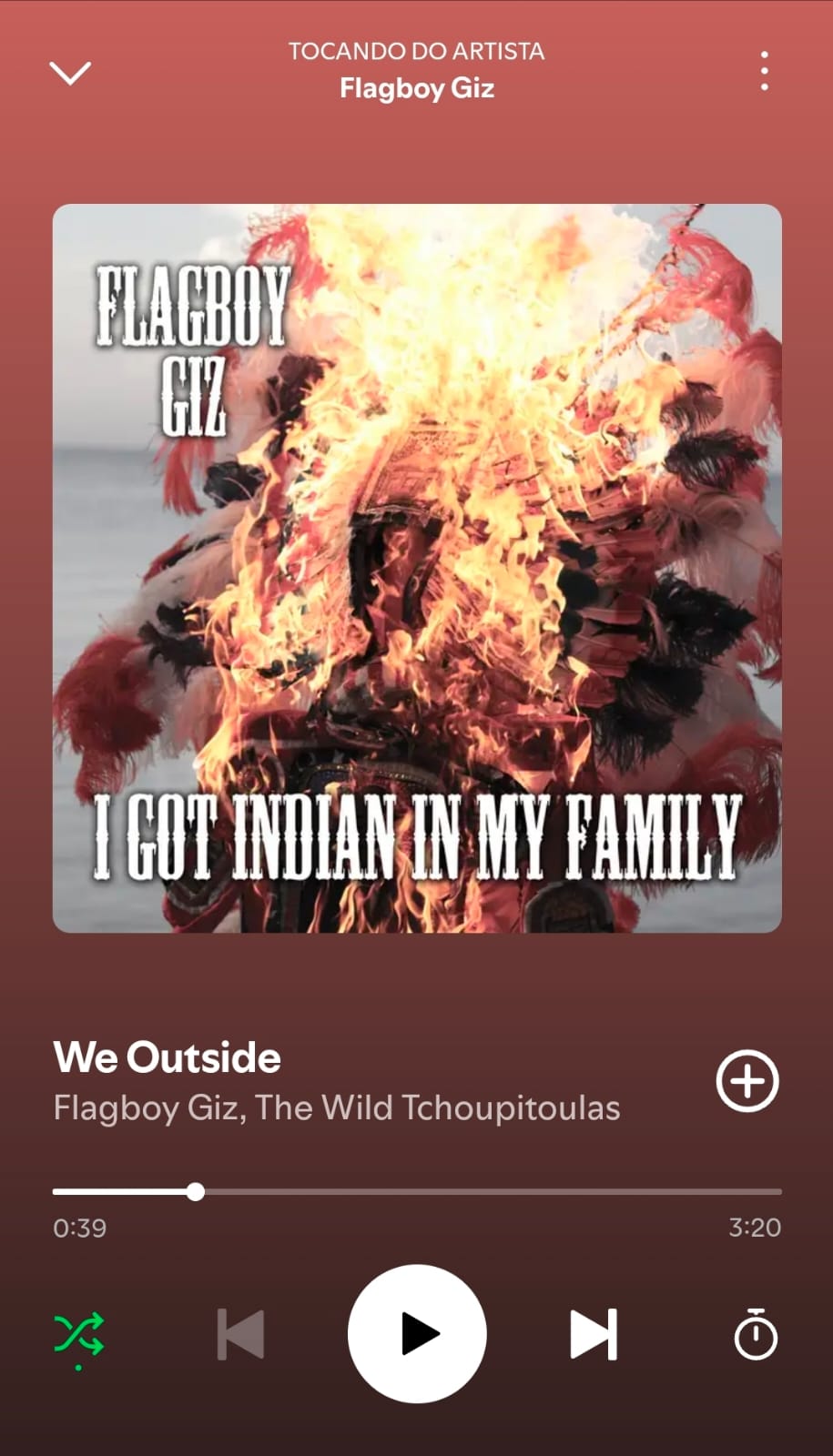
We Outside by Flagboy Giz captures that spirit perfectly.
For listeners searching Flagboy Giz We Outside meaning or We Outside song analysis, the track represents a modern expression of New Orleans cultural pride combined with hip hop and bounce music energy.
It feels celebratory.
It feels communal.
And above all it reflects the city’s deep musical heritage.
The Story Behind We Outside
Flagboy Giz is part of the Mardi Gras Indian tradition, a cultural practice unique to New Orleans where groups known as tribes create elaborate handmade suits and parade through neighborhoods during Mardi Gras and other celebrations.
These traditions combine African, Caribbean, and Native American influences, forming a vibrant cultural identity that has shaped New Orleans music for generations.
We Outside emerges from that environment.
The song reflects the spirit of gathering in public spaces, celebrating culture, and reclaiming the streets through music and dance. In many ways the phrase we outside has become a declaration of presence and unity.
For fans searching Flagboy Giz New Orleans music or Mardi Gras Indian hip hop influence, the track represents a contemporary extension of long standing traditions.
The Meaning Behind We Outside
At a surface level We Outside celebrates movement and social energy. The phrase itself suggests people gathering in public spaces to enjoy life, music, and community.
But the deeper meaning connects to cultural visibility.
For many New Orleans artists the idea of being outside symbolizes resilience. Communities that have faced economic challenges, natural disasters, and social struggles continue to express themselves through music and celebration.
For listeners searching We Outside lyrics meaning, the message revolves around pride, freedom, and collective experience.
The streets are not just physical locations.
They are cultural stages.
A Music Theory Perspective: Bounce Rhythm and Street Energy
From a music theory standpoint We Outside draws heavily from the bounce music tradition of New Orleans.
Bounce is known for its repetitive rhythmic structure, call and response vocal style, and high energy tempo designed for dancing.
Key musical elements include
- A driving hip hop beat with strong emphasis on the kick and snare
- Loop based percussion patterns creating hypnotic rhythm
- Chant like vocal phrasing encouraging audience participation
- Minimal harmonic complexity allowing rhythm to dominate
The track relies more on groove and cadence than on complex chord progressions. This rhythmic focus reflects the dance oriented nature of bounce music.
Flagboy Giz’s vocal delivery often mirrors the rhythmic pulse of the beat, functioning almost like a percussive instrument.
For readers searching New Orleans bounce music structure or Flagboy Giz music analysis, the emphasis on rhythm and repetition is essential to the genre’s identity.
Mardi Gras Indian Influence in Modern Music
One of the most fascinating aspects of We Outside is its connection to Mardi Gras Indian culture.
Historically these tribes performed chants and percussion driven music during parades. Over time those musical traditions influenced funk, jazz, and eventually hip hop.
Artists like Flagboy Giz represent a new generation blending these ceremonial traditions with contemporary production.
The result is music that feels both historical and modern.
For listeners searching Mardi Gras Indian music influence or New Orleans cultural music traditions, We Outside illustrates how heritage continues to shape modern sound.
Community Celebration and Street Culture
In New Orleans music often functions as a form of community storytelling.
Songs celebrate neighborhoods, local identity, and shared experiences. We Outside reflects that communal perspective.
The energy of the track feels like a street gathering where music, dance, and cultural pride merge into a single moment.
For readers searching New Orleans street music or cultural hip hop traditions, the song demonstrates how local identity remains central to artistic expression.
Production Style and Modern Hip Hop Elements
While the cultural roots are traditional, the production of We Outside reflects modern hip hop techniques.
Digital beat production ensures the rhythm hits hard in club environments. The bass frequencies provide physical impact, while layered percussion maintains constant movement.
The mix prioritizes clarity and rhythmic punch rather than melodic complexity.
This approach allows the song to function both as a cultural statement and a high energy party track.
Cultural Visibility and Representation
Artists like Flagboy Giz play an important role in preserving cultural traditions while adapting them for new audiences.
By integrating Mardi Gras Indian elements into hip hop, they ensure these traditions remain visible within contemporary music culture.
For listeners searching New Orleans hip hop artists or cultural fusion in rap music, We Outside stands as an example of how local identity can influence global sound.
Three More Songs by Flagboy Giz
If We Outside introduces you to the music of Flagboy Giz, these three songs provide additional insight into his style and cultural influence
1. Phantom of the Indian Council
2. Walking With a Gun
3. And Did *feat. Winsley Milan and Dominique Side)
Why We Outside Resonates
The success of We Outside comes from its authenticity.
Rather than imitating mainstream trends, the track draws directly from the musical traditions of New Orleans.
That authenticity gives the song a unique identity. Listeners can feel the cultural roots within the rhythm and vocal style.
For readers searching Flagboy Giz songs or modern bounce music artists, the track represents a powerful example of regional music influencing broader hip hop culture.
Final Thoughts
We Outside by Flagboy Giz captures the vibrant spirit of New Orleans street culture and Mardi Gras Indian tradition.
Through energetic bounce rhythms, chant driven vocals, and modern hip hop production, the track celebrates community identity and cultural resilience.
It is more than a party song.
It is a declaration of presence.
A reminder that music often begins in the streets where culture lives and grows.
And in New Orleans those streets have always had a rhythm of their own.