
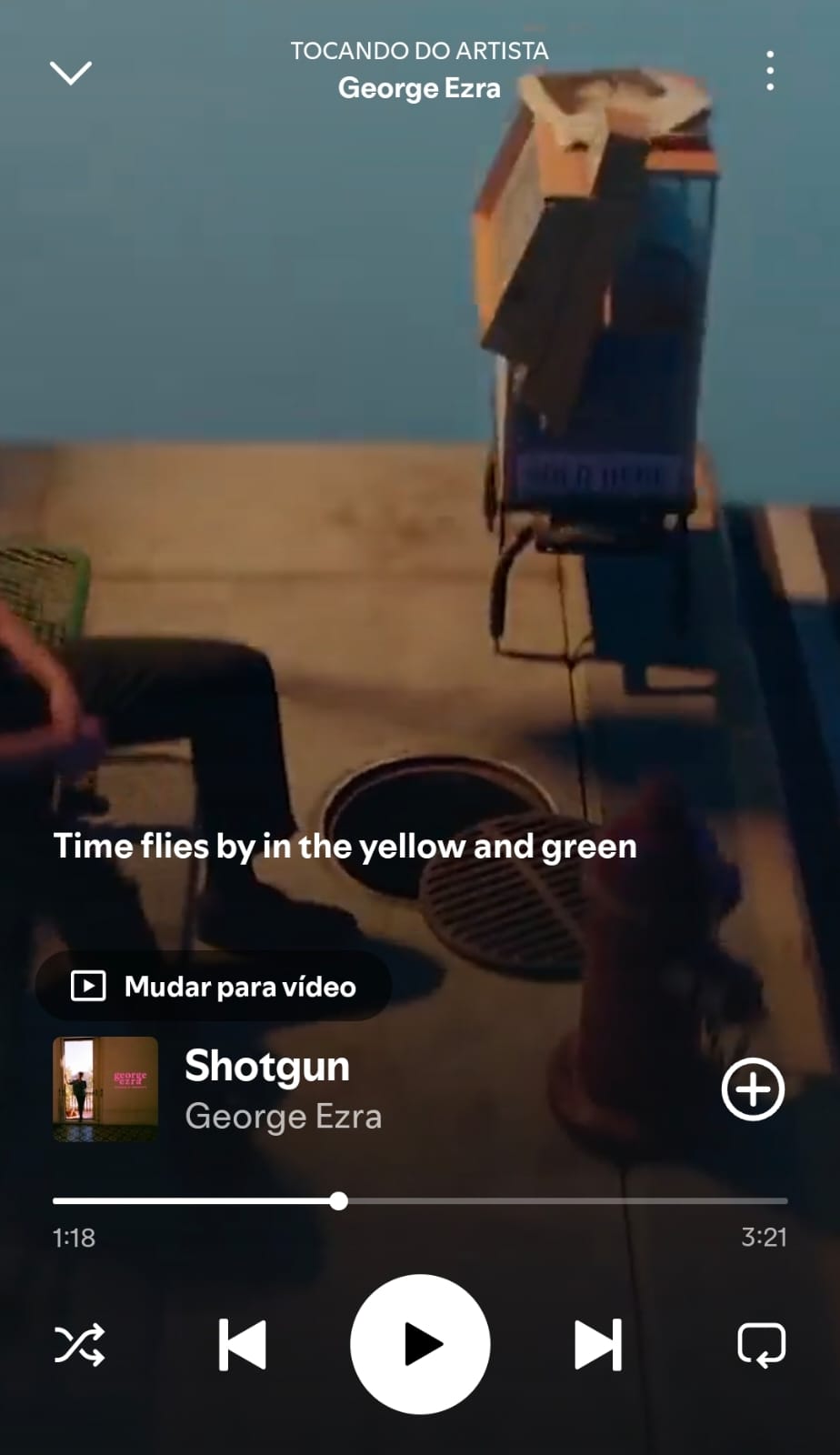
Some days need a wake me up something. Most days is a cup of coffee, but sometimes it needs more than that. today, it was this song. Today is the first cold day of fall (it’s not even winter yet here). You know the type. Songs that urge you to move, like getting into a car with the windows already down, like you are going somewhere even if you have no idea where. Shotgun by George Ezra is that kind of song, and if you’ve heard it even once, you already know what I mean. It hit me completely by accident, the way most great discoveries do – one of those days where a song just comes through a speaker somewhere, and you stop whatever you are doing and think, what is this and why have I been living without it?
Who is George Ezra?
George Ezra Barnett was born in 1993 in Hertford, England. Nothing about that sentence screams international pop star, but there he was, at 21 years old, releasing a debut album called Wanted on Voyage that went to number one in the UK, spawning one of the decade’s most recognizable songs, Budapest. The kid had a voice that nobody expected from a skinny twenty-something from Hertfordshire. It’s a deep, warm baritone with this slight rasp that feels like it belongs to someone twice his age who has seen twice as much of the world. He studied music at the BIMM Institute in Brighton and spent time traveling across Europe – Budapest, Barcelona, Barcelona again – letting those places become the emotional raw material for his first record.
After the massive success of Wanted on Voyage and the follow-up EP, Ezra spent some time dealing with anxiety issues that he has been publicly open about, something that even led him to take a step back from the spotlight for a while. When he came back, he came back with Staying at Tamara’s, his second album, released in 2018. And the first single from that album was Shotgun.
The story behind Shotgun
The song was written while Ezra was working through his anxiety and making an active choice to be more present, more grateful, more just there in the world. He has said in interviews that the lyrics are about sitting in the passenger seat of a car – the “shotgun” position – and letting the journey take him wherever, without the weight of being in control. It’s a song about surrender in the best possible way. About looking up at the sky and choosing to be okay with everything.
Staying at Tamara’s was recorded in Barcelona, which might explain why the whole album, Shotgun especially, has this Mediterranean warmth baked into it. Even when you are sitting in a rainy English bus stop listening to it through earphones, it sounds like golden hour somewhere south of the Pyrenees.
The song was released in March 2018 and by the summer of that year it was everywhere. It hit number one in the UK, Ireland, Australia, and a bunch of other countries. It spent weeks at the top and became inescapable in the best possible way – the kind of inescapable where you don’t actually mind hearing it for the fifteenth time that week.
George Ezra’s broader discography
If Shotgun is your gateway into George Ezra’s world, there is plenty more to explore. Budapest, from the first album, is a must. It is a beautifully simple song with a big acoustic guitar and that voice doing all the heavy lifting. Barcelona, from the same album, has a similar warm, European energy that foreshadows Shotgun in many ways.
The second album Staying at Tamara’s is worth listening to in full. Don’t skip it after Shotgun. It holds together as an album experience in the way that is unfortunately rare in the streaming era. Paradise, Pretty Shining People, and Hold My Girl are standout tracks that show the range Ezra has as a songwriter – the sweet and the melancholic sitting comfortably next to each other like good friends.
In 2023 he released Gold Rush Kid, his third studio album, which leans further into the upbeat, almost folk-pop direction he had been moving toward. It’s a confident record that shows an artist fully at ease with who he is musically.
Talk nerdy to me: music theory trivia on Shotgun
For beginner music producers and music lovers who want to go a layer deeper, Shotgun is a fascinating study in how simplicity and craft are not opposites. The song sits in the key of A major and moves along a chord progression built primarily on I–V–vi–IV, one of the most widely used sequences in Western pop music – the same foundational structure behind hits by everyone from Journey to Adele. What makes Shotgun feel distinctive within that framework is the way the chords are voiced and the momentum carried between them. The I chord (A major) and the V chord (E major) move with a brisk, almost triumphant quality, while the vi (F# minor) briefly introduces shadow before the IV (D major) releases it all back into warmth. It is a cycle that mimics the emotional arc of the song itself: moving forward, catching brief clouds, and always returning to the light.
Rhythmically, Shotgun operates in 4/4 time, which is hardly surprising for a mainstream pop song, but the rhythm section does something interesting with it. There is a driving acoustic guitar strum pattern that pushes slightly on the offbeats, giving the song this forward-leaning, almost kinetic energy – like the car in the lyrics is always just about to pick up speed. The percussion is bright and snappy without being aggressive, keeping the groove cheerful rather than urgent. Genre-wise the song lives in the intersection of indie pop and folk pop, with a rootsy warmth in the acoustic instrumentation that keeps it grounded while the production polish gives it the radio-ready sheen. The result is a song that sounds organic and effortless, when in reality the arrangement is working very deliberately to make you feel like the windows are down and the road is open.
Why it still works
There is a version of this song that could have been overproduced into something glossy and forgettable. It did not become that. The production on Shotgun is warm, not shiny. The acoustic guitar sits front and center, Ezra’s voice is not buried under layers of processing, and the whole thing breathes. That breathing space is what makes it feel like a road and not a studio.
It is also just a genuinely well-written song. The lyrics are simple without being stupid. “I’ll be riding shotgun underneath the hot sun, feeling like a someone” is one of those lines that should not work as well as it does but works completely. It is the kind of lyric that a better-known songwriter would probably overthink into something clever and airless. Ezra just wrote the obvious true thing and trusted it.
Seven years after its release, Shotgun still sounds like summer. It still sounds like a trip somewhere without a real plan. That is not an accident. That is a song that knows exactly what it is, which is one of the rarest things in music.
That day it popped up in my playlist completely at random and I listened to it three times in a row and then put the album on. Some songs just do that to you.