
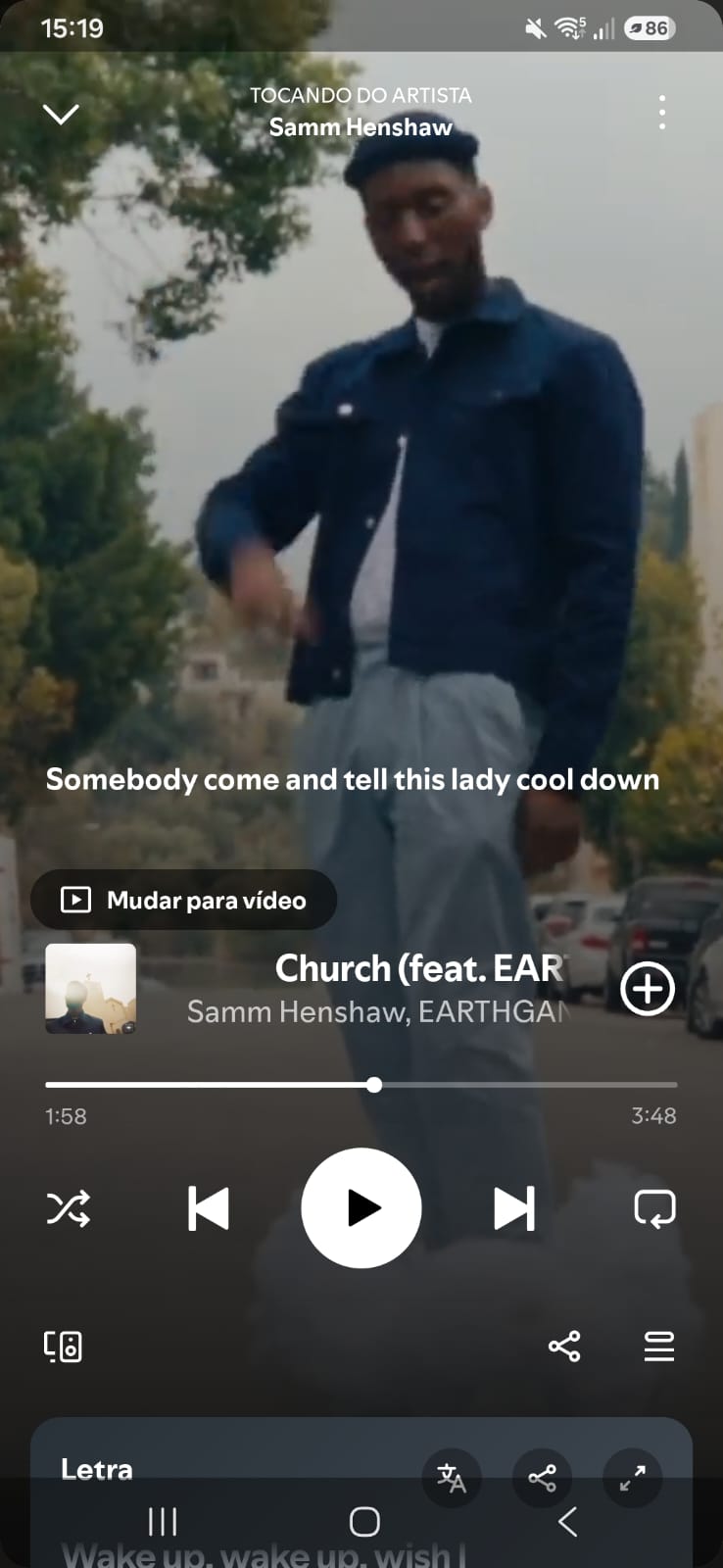
There is a certain kind of song that feels alive the moment it starts. Not because it is loud or dramatic, but because it carries a sense of movement and warmth that immediately pulls you in. “Church” by Samm Henshaw has exactly that effect.
Released in 2015, the track introduced many listeners to Samm Henshaw’s distinctive mix of soul, gospel, funk, and modern R&B. It was a song that felt rooted in tradition while sounding fresh enough to belong entirely to its own moment.
That combination gave it real staying power.
“Church” is built around celebration. Not in a superficial sense, but in a deeper way. It feels like gratitude, release, and self-expression wrapped inside a groove that refuses to sit still.
It is a song about spirit.
And that spirit is contagious.
Samm Henshaw and the Sound of Modern Soul
Samm Henshaw emerged at a time when soul music was expanding in multiple directions. Some artists leaned heavily into minimalism. Others focused on atmospheric production.
Henshaw chose something different.
He embraced fullness.
His music pulls openly from gospel choirs, live instrumentation, funk basslines, and rich vocal layering. But it never feels like imitation. Instead, it feels like reinterpretation.
That is what makes his sound stand out.
“Church” may be the clearest introduction to this identity. It carries all the emotional force of gospel music while keeping the looseness and groove of contemporary soul.
It sounds joyful without sounding polished to the point of losing character.
That rawness matters.
It keeps the song human.
Why “Church” Connects So Easily
At the center of “Church” is a simple but powerful idea: finding something that lifts you.
For some people that is faith.
For others, it is music itself.
The song leaves space for both.
That openness is part of its strength. Henshaw never forces a single interpretation. Instead, he uses the language of church, praise, and spiritual energy to describe the emotional power of music and connection.
That makes the song highly relatable.
You do not need a religious background to understand what it feels like to be moved.
That emotional accessibility is why “Church” continues to resonate.
It speaks to joy in a way that feels physical.
You can hear it.
But you can also feel it.
The Groove That Carries Everything
The rhythm section in “Church” is central to its impact.
From the opening beat, the song establishes a pulse that feels organic and immediate. The drums swing slightly, giving the groove a loose feel rather than rigid precision.
That looseness creates life.
The bassline locks tightly into the drums, building a foundation that feels grounded but flexible. Around that, guitar accents and claps add texture.
Each layer feels intentional.
Nothing overcrowds the arrangement.
That restraint allows the energy to build naturally.
By the time the chorus arrives, the song feels bigger without becoming chaotic.
That sense of controlled expansion is one of the song’s smartest production choices.
It mirrors the emotional build of the lyrics.
Gospel Without Boundaries
A major reason “Church” feels so distinctive is its use of gospel elements.
The backing vocals are crucial.
They create a communal feeling, almost like a congregation responding in real time. This call-and-response structure is deeply rooted in gospel tradition, but here it is placed inside a modern soul framework.
That fusion feels seamless.
It creates energy without forcing it.
The communal aspect of the vocals makes the song feel participatory. Even on a first listen, it feels like something you could sing along to.
That quality matters.
Songs built for participation often last longer because they create memory through repetition and shared experience.
“Church” understands that instinctively.
A Music Theory Perspective on “Church”
From a music theory perspective, “Church” is a strong example of how groove, harmonic layering, and vocal architecture can create emotional lift.
The harmonic progression is relatively straightforward, relying on repeating chord cycles that establish familiarity. This allows rhythm and vocals to carry the emotional complexity.
The groove uses syncopation heavily.
Syncopation means accents often fall between expected beats, creating movement and tension. In “Church,” this makes the rhythm feel playful and alive.
The drums and bass work as a single unit.
The bassline reinforces harmonic stability while also adding rhythmic momentum. This dual role is essential to the song’s energy.
Vocally, Henshaw uses phrasing that blends melodic singing with rhythmic emphasis. His delivery often pushes slightly ahead of the beat, creating urgency.
The backing vocals create harmonic expansion.
When the choir-like layers enter, the harmonic space widens, increasing emotional intensity without changing the underlying progression dramatically.
This technique is common in gospel music.
It creates lift.
And in “Church,” that lift is what gives the song its emotional payoff.
3 More Samm Henshaw Songs You Should Listen To
If “Church” made you curious about Samm Henshaw, these three tracks are the perfect next step.
Broke
A soulful and deeply personal track about ambition, struggle, and staying grounded while chasing bigger dreams. The groove is warm, and the storytelling feels intimate.
Still Broke
A spiritual sequel to “Broke,” but with sharper confidence and more rhythmic punch. It captures growth without losing the honesty that defines his writing.
Grow
A reflective song centered on patience, emotional development, and accepting that change takes time. The arrangement is softer, allowing the lyrics to carry the emotional weight.
Why “Church” Still Feels Fresh
A lot of soul records lean heavily into nostalgia.
“Church” borrows from the past but never feels trapped by it.
That is important.
It takes gospel and soul traditions and places them into a contemporary context without flattening their emotional weight.
That makes it feel timeless rather than retro.
The themes also help.