
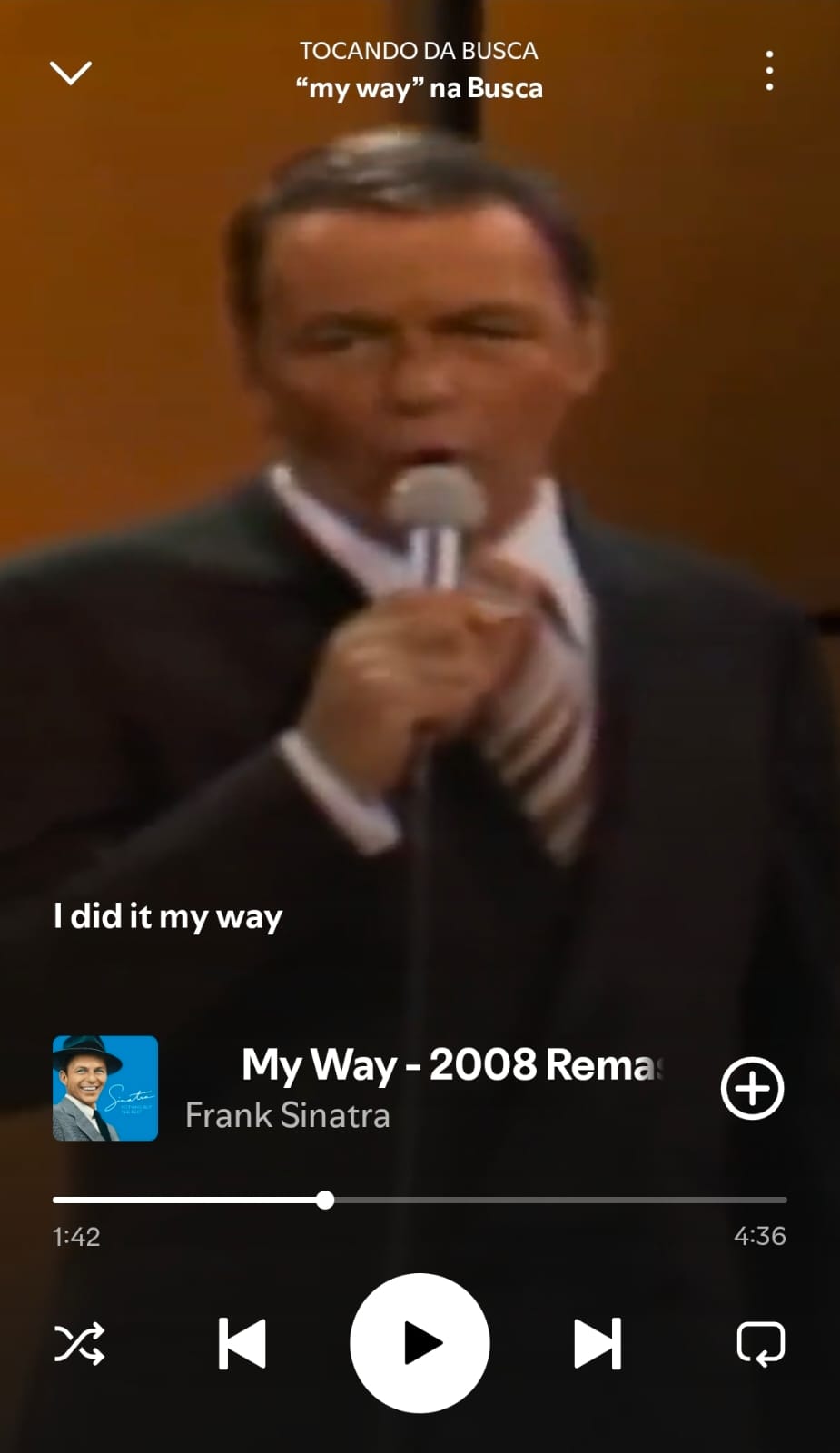
Some songs become famous because they dominate the charts. Others become cultural landmarks because they express emotions and ideas people carry with them for an entire lifetime. “My Way” by Frank Sinatra belongs firmly in the second category.
Released in 1969, the song quickly evolved beyond a standard recording into something much larger. Over the decades, “My Way” became associated with reflection, legacy, independence, confidence, regret, pride, and personal identity all at once.
Very few songs hold that kind of emotional weight.
The track feels almost ceremonial. Whether played at concerts, farewell events, films, tributes, or deeply personal moments, “My Way” carries an emotional gravity that instantly changes the atmosphere around it.
Part of that power comes from Sinatra himself.
By the time he recorded “My Way,” Frank Sinatra already represented an entire era of music and entertainment. His voice carried decades of experience, public triumphs, failures, reinventions, and emotional complexity.
When Sinatra sang “My Way,” listeners believed him.
That authenticity transformed the song into something timeless.
The Story Behind “My Way”
Interestingly, “My Way” did not originally begin as an English-language song.
The melody comes from the French song “Comme d’habitude,” written by Claude François and Jacques Revaux. Later, Paul Anka rewrote the lyrics entirely for Sinatra, crafting a deeply personal narrative about reflection and living life according to one’s own choices.
That lyrical transformation changed music history.
Instead of focusing on romantic heartbreak like the original French version, “My Way” became an existential statement about individuality, mistakes, perseverance, and self-determination.
The lyrics feel deeply personal while remaining universal enough for millions of listeners to connect with emotionally.
That balance explains much of the song’s enduring impact.
Why “My Way” Still Resonates Across Generations
One reason “My Way” continues resonating decades later is because it addresses themes nearly everyone eventually confronts.
The song is fundamentally about looking back on life honestly.
There is pride inside the lyrics, but also vulnerability. The narrator acknowledges mistakes, emotional struggles, and uncertainty while still insisting on personal agency and dignity.
That emotional complexity gives the song unusual depth.
Many anthemic songs about confidence feel simplistic or overly triumphant. “My Way” works because it accepts imperfection. The emotional message is not “I lived flawlessly.” It is “I lived authentically.”
That distinction matters enormously.
The arrangement also contributes heavily to the emotional impact. The orchestration gradually expands throughout the song, mirroring the emotional escalation of the lyrics themselves. What begins reflective and restrained slowly becomes emotionally massive.
By the final chorus, the song feels almost overwhelming emotionally.
Sinatra’s vocal delivery plays a crucial role in this progression.
Rather than oversinging constantly, he controls emotional pacing carefully. He allows tension to build naturally until the climactic moments arrive with genuine force.
That restraint makes the emotional peaks feel earned.
Frank Sinatra’s Extraordinary Presence
Frank Sinatra remains one of the most influential vocalists in modern music history because of his extraordinary interpretive ability.
Sinatra understood phrasing at an almost unmatched level. He treated lyrics conversationally, shaping sentences emotionally rather than simply singing notes mechanically. This approach gave his performances intimacy and realism.
“My Way” showcases this skill perfectly.
Every line feels deliberate. Sinatra sounds reflective, wounded, proud, vulnerable, and determined sometimes all within the same verse. That emotional nuance elevates the song beyond traditional pop performance.
His voice itself also carried unique emotional texture by this stage of his career.
The slight roughness and maturity in Sinatra’s tone during the late 1960s actually strengthened the emotional realism of “My Way.” A younger, smoother voice may not have communicated the same emotional authority.
The imperfections made the performance more believable.
Why “My Way” Became a Cultural Symbol
Over time, “My Way” evolved into something much larger than a hit single.
The song became associated with personal identity itself. Politicians, entertainers, athletes, filmmakers, and ordinary listeners all embraced the track because its themes feel adaptable to countless life experiences.
The song represents independence emotionally.
That universality helped it survive changing musical trends. Even listeners who normally do not engage with traditional vocal pop standards still recognize “My Way” immediately because the emotional message transcends genre boundaries.
The track also became iconic because of its dramatic structure.
Everything about the arrangement feels cinematic. The orchestration grows steadily larger while Sinatra’s vocal intensity rises naturally alongside it. By the conclusion, the song achieves enormous emotional scale without losing intimacy completely.
That balance remains incredibly difficult to replicate.
A Music Theory Perspective on “My Way”
From a music theory perspective, “My Way” succeeds because of dynamic escalation, melodic phrasing, and orchestral tension building.
The harmonic structure follows a traditional ballad framework but uses modulation and expanding orchestration to increase emotional intensity gradually throughout the song. This harmonic growth mirrors the emotional arc of reflection turning into declaration.
The melody itself is carefully constructed.
Many phrases begin conversationally before expanding into longer sustained notes that create emotional emphasis. This combination allows the song to feel intimate during verses while still delivering dramatic climactic moments.
Sinatra’s phrasing is especially important.
Rather than rigidly following rhythmic structure, he stretches and delays certain phrases slightly to heighten emotional realism. This flexibility makes the performance feel deeply human and emotionally spontaneous.
The orchestration also plays a central role.
Strings gradually thicken the emotional atmosphere while brass accents reinforce moments of emotional triumph and declaration. The arrangement increases density carefully without overwhelming the vocal performance.
Another key detail is pacing.
The song does not rush emotionally. Instead, it allows tension and emotional weight to accumulate gradually over time. This slow build gives the final sections enormous impact.
For musicians and arrangers, “My Way” remains a masterclass in emotional pacing and vocal interpretation.
Why the Song Continues Influencing Popular Culture
Even decades later, “My Way” remains deeply embedded in global culture.
The song continues appearing in films, television, tribute performances, documentaries, and public events because it represents emotional reflection in a uniquely powerful way.
Artists across multiple genres have covered the song repeatedly because the composition itself is extraordinarily strong.
Yet Sinatra’s version still feels definitive.
Part of that is timing. Sinatra recorded the song at a moment in his life and career when the emotional themes aligned naturally with his public identity. The performance feels inseparable from the artist himself.
That authenticity cannot easily be recreated.
Three More Frank Sinatra Songs You Should Listen To
If “My Way” introduced you to Frank Sinatra or inspired you to revisit his catalog, these songs are essential listening.
1. “Fly Me to the Moon”
One of Sinatra’s most iconic recordings, combining effortless swing energy with timeless vocal charm.
2. “That’s Life”
A bold and emotionally resilient anthem about setbacks, perseverance, and refusing to give up.
3. “New York, New York”
A massive orchestral classic that became permanently associated with ambition, reinvention, and the spirit of New York City.
Why “My Way” Endures
Many songs become popular for a moment. Very few become emotional statements people carry with them throughout their lives.
“My Way” continues resonating because Frank Sinatra delivered a performance rooted in emotional truth, vulnerability, pride, and human imperfection.
The lyrics still feel powerful. The orchestration still feels cinematic. The performance still sounds completely authentic.
And every time Sinatra reaches the final declaration of “I did it my way,” the song still feels less like entertainment and more like a lifetime condensed into music.